
In the world of cross-border finance, a single misunderstood figure or misinterpreted clause can derail multi million dirham deals. That is why specialist financial and banking interpretation services are essential for institutions and businesses operating in Dubai, Abu Dhabi, Sharjah, Al Ain, and across the UAE. When you are discussing investment agreements, credit facilities, M&A structures, or regulatory compliance, the quality of interpretation can either reduce risk or amplify it.
This cluster guide focuses specifically on what makes financial and banking interpretation different, how to choose the right interpreter for high-stakes meetings, and how to prepare so you get accurate, compliant communication in every language. For a broader framework on how to select, buy, and manage interpretation providers across all industries, see this reference guide: Complete overview: “Interpretation Services: The Complete Guide to Choosing, Buying, and Succeeding.”
Drawing on the experience of UAE-based providers such as Sim-trans Legal Translation & Interpretation Services, we will walk through the key risks, best practices, and practical steps you can take to protect your organization in every multilingual financial interaction.
Why Financial and Banking Interpretation Is Uniquely High-Risk
Not all interpretation assignments carry the same consequences. In day-to-day conversations, minor inaccuracies may be tolerable. In financial and banking settings, however, small errors can have outsized legal and economic impact.
1. Precision Around Numbers and Terms
Financial meetings require exact rendering of:
- Amounts, percentages, and valuation figures
- Interest rates, maturities, and repayment schedules
- Guarantees, securities, and collateral details
- Complex instruments (derivatives, sukuk structures, convertible notes)
A misplaced decimal or misheard percentage can alter the commercial reality of a deal. Skilled financial interpreters are trained to handle numbers under pressure, double-checking and confirming when necessary without disrupting the flow of the meeting.
2. Legal and Regulatory Consequences
Financial and banking interpretation services in the UAE are regulated by multiple frameworks, including UAE Central Bank rules, local free zone regulations (such as ADGM in Abu Dhabi and DIFC in Dubai), and cross-border compliance for international investors. Misinterpreting regulatory concepts, risk disclosures, or client consent can lead to:
- Non-compliance with KYC/AML requirements
- Disputes over informed consent and client understanding
- Litigation or arbitration over contract interpretation
- Reputational damage with regulators and investors
Interpreters working in this space must understand the practical meaning of these requirements, not simply translate words literally.
3. High-Pressure Environments
Board meetings, investor roadshows, high level negotiations, and crisis calls (e.g., restructuring, default, or regulatory investigation) are all high pressure situations. Participants often speak quickly, use jargon, and switch between English, Arabic, and other languages.
Financial interpreters must remain calm, manage speed and accents, and maintain accuracy while respecting confidentiality. This is particularly important in Dubai and Abu Dhabi, where global financial centers attract stakeholders from Europe, North America, Asia, and across the MENA region.
4. Multilingual Stakeholder Mix
Financial deals in the UAE frequently involve:
- Arabic speaking founders or family offices
- English peaking international banks, PE funds, or VC investors
- Regional regulators or advisors
- Specialist consultants from different jurisdictions
Bridging these linguistic and cultural gaps accurately is a specialized skill. Experienced financial and banking interpretation providers, such as Sim-trans Legal Translation & Interpretation Services, develop teams capable of operating in these complex stakeholder environments.
Key Use Cases for Financial and Banking Interpretation in the UAE

Understanding where and how to use professional interpretation services helps you plan better and allocate budget wisely.
1. Investor and Fundraising Meetings
For startups, SMEs, and large corporates in Dubai, Sharjah, or Al Ain raising capital from overseas investors, live interpretation can be the difference between lukewarm interest and solid commitment. Use interpretation for:
- Investor pitch meetings and Q&A sessions
- Due diligence presentations with financial models
- Site visits and management presentations
Here, interpreters must handle both financial terminology and the persuasive, relationship-building language common in fundraising.
2. Credit, Loan, and Project Finance Negotiations
When negotiating syndicated loans, project finance, or corporate banking facilities, precision is paramount. Typical scenarios include:
- Loan term negotiations between local borrowers and international lenders
- Security package discussions involving multiple jurisdictions
- Refinancing or restructuring discussions with creditor committees
Interpreters ensure that each party understands covenants, events of default, security enforcement rights, and step-in mechanisms without ambiguity.
3. M&A, Joint Ventures, and Strategic Transactions
Mergers and acquisitions often require multiple rounds of meetings:
- Initial exploratory talks
- Management and operational due diligence
- Negotiation of SPA/SHAs and ancillary agreements
- Integration or post-closing governance meetings
Each stage introduces technical and legal language, and misunderstandings can surface later as disputes. Using skilled financial interpreters aligned with your legal advisors minimizes these risks.
4. Regulatory, Compliance, and Audit Interactions
Financial institutions in Abu Dhabi, Dubai, and Sharjah may need interpretation support when dealing with:
- Regulatory inspections or interviews
- AML/KYC training sessions with cross-border teams
- Internal or external audits involving foreign stakeholders
In these settings, precision and neutrality are key. Interpreters must avoid adding or omitting any nuance that could affect regulatory understanding.
5. Conferences, Roadshows, and Investor Days
Dubai and Abu Dhabi host numerous finance conferences, fintech events, and investor forums. Simultaneous interpretation with headsets and booths is often required for:
- Keynote speeches and panel discussions
- Breakout sessions with technical content
- Closed-door roundtables with regulators and industry leaders
Professional conference-grade interpretation services ensure every delegate receives accurate content in their preferred language, boosting event impact and reputation.
Types of Interpretation Services Used in Finance and Banking
Choosing the right interpretation mode is as important as selecting the right interpreter. Here is how the main types apply to financial and banking scenarios in the UAE.
1) Simultaneous Interpretation
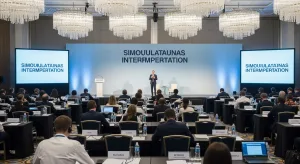
Best for: conferences, investor days, large board meetings, multi-country town halls.
Simultaneous interpreters listen to the speaker and render the message in real time, typically via headsets or remote platforms. This mode keeps events on schedule but demands highly skilled interpreters and usually requires specialized equipment.
In Dubai and Abu Dhabi conference venues, Sim-trans Legal Translation & Interpretation Services can provide both interpreters and the necessary technical setup (booths, receivers, and support staff).
2) Consecutive Interpretation

Best for: negotiations, bank-client meetings, regulatory interviews, due diligence sessions.
The speaker pauses regularly, allowing the interpreter to translate in segments. This is ideal when precision and nuance matter more than speed. For example, when clarifying the language of a loan covenant or discussing risk disclosures with a private client, consecutive interpretation offers careful, controlled communication.
3) Whispered Interpretation (Chuchotage)

Best for: supporting one or two individuals in a larger meeting.
The interpreter sits next to the client and whispers the interpretation, without equipment. This is useful if a single stakeholder (e.g., a board member or VIP investor) requires language support but the rest of the group operates in a common language like English.
4) Remote and Hybrid Interpretation

Best for: virtual board meetings, cross border deal calls, hybrid conferences.
For cross-border deals involving parties in Sharjah, Al Ain, London, and Singapore, remote interpretation via secure platforms can be efficient. Ensure that your provider can:
- Offer secure, encrypted connections
- Handle multiple language channels
- Provide technical support before and during meetings
This reduces travel costs while keeping high stakes communication accurate and confidential.
Core Competencies of a Professional Financial Interpreter
Beyond language fluency, interpreters for banking and finance in the UAE need a distinctive skill set. When you assess providers, look for these competencies.
1. Subject-Matter Expertise in Finance and Banking
Interpreters must understand the concepts behind the words. For example, they should know the difference between:
- Secured vs. unsecured lending
- Equity vs. debt financing
- Conventional vs. Islamic finance structures
- Primary vs. secondary market transactions
This ensures they select accurate equivalents in the target language, especially in discussions involving Sharia compliant products, sukuk, or profit-sharing mechanisms common in the region.
2. Familiarity with Legal and Regulatory Terminology
Financial contracts are legal documents. Interpreters should be comfortable with terminology related to:
- Representations and warranties
- Covenants and undertakings
- Indemnities and limitations of liability
- Events of default and termination provisions
Providers like Sim-trans Legal Translation & Interpretation Services specialize in both legal and financial language, making them suitable for cross over assignments where law and finance intersect.
3. Numerical Accuracy Under Pressure
Handling numbers is one of the biggest challenges in live interpretation. A competent interpreter will:
- Repeat and confirm critical figures when needed
- Use note taking techniques for long numeric sequences
- Stay consistent with currencies, units, and percentages
In addition, they must be aware of regional conventions (e.g., decimal and thousand separators) to avoid confusion when discussing large sums in AED, USD, EUR, or other currencies.
4. Confidentiality and Ethical Standards
Financial interpreters often access sensitive, non-public information. They must adhere to strict confidentiality obligations, ideally backed by NDAs and a professional code of ethics. Always verify that your provider:
- Signs confidentiality agreements
- Implements data security and non disclosure practices
- Trains interpreters on ethical standards and conflicts of interest
5. Cultural and Business Etiquette Awareness
Deals in the Gulf can hinge on trust, respect, and relationship dynamics. Interpreters should be sensitive to:
- Forms of address and politeness strategies
- Negotiation styles in Arabic vs. Western contexts
- Local norms around hierarchy in family businesses and banks
This cultural intelligence helps prevent miscommunication that could unintentionally offend or signal the wrong message during high level meetings.
How to Prepare for a High Stakes Financial Meeting with Interpreters
Preparation is a major predictor of success when using interpretation services. Here is a step-by-step checklist to optimize outcomes for your next banking or financial meeting in Dubai, Abu Dhabi, Sharjah, or Al Ain.
Step-by-Step Preparation Checklist
- Define the Meeting Objective and Format
- Is it a negotiation, presentation, training, or regulatory interaction?
- Will participants be in-person, remote, or hybrid?
- How many languages are required?
- Select the Interpretation Mode
- Simultaneous for conferences and large sessions
- Consecutive for negotiations and detailed discussions
- Whispered for select VIPs
- Remote/hybrid for cross-border calls
- Provide Background Materials
- Draft agendas and list of participants
- Term sheets, financial models, and slide decks
- Relevant contracts or regulatory documents
Share these with your interpretation provider at least 48–72 hours in advance so interpreters can study terminology and context.
- Clarify Terminology Preferences
- Preferred terms for key concepts (e.g., your bank’s internal jargon)
- Translations of product names or proprietary services
Sim-trans can help you build bilingual glossaries and ensure consistency across multiple meetings and interpreters.
- Arrange Technical and On-Site Logistics
- Reserve booths, headsets, and microphones for simultaneous interpretation
- Test remote platforms, audio quality, and backup connections
- Schedule interpreters with appropriate breaks for longer sessions
- Brief Speakers and Facilitators
- Encourage speakers to pace themselves and avoid speaking over each other
- Agree on signals to pause if clarification is needed
- Share guidelines on handling Q&A with interpreters
- Debrief After the Meeting
- Collect feedback from participants
- Refine glossaries and terminology lists
- Identify improvements for future sessions
Continuous feedback helps your provider tailor services more precisely to your institution’s needs.
Evaluating and Choosing a Financial Interpretation Provider in the UAE

With many language service providers in the market, how do you choose the right partner for high stakes financial communication? Consider these key criteria.
1. Experience in Financial and Legal Interpretation
Look for providers who can demonstrate:
- Case studies or references from banks, investment firms, or regulators
- Experience in both legal and financial interpretation
- Knowledge of the UAE’s multilingual environment and regulations
Sim-trans Legal Translation & Interpretation Services, for example, operates across Dubai, Abu Dhabi, and the wider UAE, with a focus on legal and certified translation that complements financial assignments.
2. Interpreter Selection and Vetting
Ask your provider how they vet interpreters:
- Do they test for subject matter expertise in banking and finance?
- Are interpreters certified or accredited by recognized bodies where applicable?
- What is their minimum experience requirement for high-stakes meetings?
3. Quality Assurance Processes
High quality interpretation is not just about individual talent; it is about process. A professional provider should offer:
- Preparation protocols and terminology research
- Team coordination for events with multiple interpreters
- Feedback and continuous improvement mechanisms
4. Local Presence and Regional Coverage
In person meetings in Dubai International Financial Centre, Abu Dhabi Global Market, or banks in Sharjah and Al Ain benefit from a partner with local presence. UAE based providers can:
- Respond quickly to last minute requests
- Coordinate onsite equipment and logistics
- Align with local cultural and business practices
5. Data Security and Confidentiality
Especially for remote interpretation, evaluate:
- Secure file transfer and storage policies
- Encryption standards for online sessions
- Internal confidentiality training and NDAs
6. Transparent Pricing and Scope
Banking and financial institutions need predictable cost structures. Request clear proposals that outline:
- Hourly or daily rates per interpreter
- Equipment and technical support fees
- Travel, accommodation, or overtime policies
This helps you compare providers on both quality and value, not just headline price.
Common Pitfalls in Financial Interpretation And How to Avoid Them
Even with good providers, avoidable mistakes can undermine otherwise well planned meetings. Awareness of these pitfalls will help you manage risk.
1. Using Generalist Interpreters for Specialized Finance Meetings
Generalist interpreters may be excellent linguists but lack financial vocabulary and contextual understanding. This often leads to:
- Vague or approximate translations of key terms
- Misinterpretation of regulatory or contractual nuances
- Frequent interruptions to clarify basic concepts
Solution: insist on interpreters with demonstrable banking and finance experience, especially for negotiations and regulatory meetings.
2. Inadequate Briefing and Preparation
Sending interpreters into a complex M&A negotiation without documents or context is a recipe for confusion. Solution:
- Share agendas, term sheets, and slide decks in advance
- Hold a short pre-meeting briefing with interpreters for complex deals
3. Poor Meeting Discipline
Overlapping speakers, side conversations, and rapid fire exchanges make effective interpretation impossible. Solution:
- Appoint a chairperson or facilitator
- Set ground rules on taking turns and speaking clearly
4. Neglecting Technical Setup for Remote or Hybrid Sessions
Low quality audio, unstable connections, and untested platforms can cripple even the best interpreters. Solution:
- Run test calls before the meeting
- Ensure all participants have good headsets and quiet environments
- Use professional platforms recommended by your provider
5. Underestimating Fatigue and Scheduling
Interpreting complex financial discussions for many hours without breaks leads to errors. Solution:
- For simultaneous interpretation, schedule interpreters in pairs
- Build in breaks for long negotiations or all day sessions
Example Scenarios: How Quality Interpretation Changes Outcomes
The impact of quality interpretation services becomes clear in practical scenarios commonly encountered in the UAE financial sector.
Scenario 1: Cross Border Project Finance in Abu Dhabi
A UAE-based infrastructure company is securing a multi currency project finance package from a syndicate of European and Asian banks. Meetings involve complex risk allocation, security documents, and government guarantees.
With specialist interpretation:
- Arabic-speaking government stakeholders fully understand lender requirements
- Foreign lenders receive clear explanations of local legal concepts
- Negotiations proceed efficiently, reducing the time to financial close
Scenario 2: Private Banking Client Meeting in Dubai
A high-net-worth Arabic-speaking client in Dubai meets with an international private bank to discuss portfolio restructuring. The bank’s investment proposals are in English, with detailed risk disclosures.
With professional consecutive interpretation:
- The client receives transparent, understandable explanations of risks
- The bank reduces legal exposure by ensuring informed consent
- Trust and relationship depth increase, supporting long-term engagement
Scenario 3: Fintech Conference in Sharjah
A regional fintech conference in Sharjah attracts speakers from Europe, Asia, and the GCC. Sessions cover blockchain, digital payments, and regulatory sandboxes.
With simultaneous interpretation:
- Arabic- and English-speaking audiences access all content in real time
- International speakers feel confident their ideas are conveyed accurately
- The event gains a reputation for professionalism and inclusivity
FAQ: Financial and Banking Interpretation Services
1. Why can’t we rely on bilingual staff for financial meetings?
Bilingual staff may be comfortable in both languages but are rarely trained interpreters. High stakes financial discussions require fast processing, precise terminology, and strict neutrality. Professional interpreters are trained in note-taking, memory techniques, ethical standards, and managing complex interactions. Using bilingual staff informally increases the risk of omissions, bias, and misunderstandings.
2. How far in advance should we book interpretation services for a major deal?
For critical negotiations, regulatory meetings, or conferences in Dubai or Abu Dhabi, it is wise to book at least 2 to 4 weeks in advance, particularly if you need specific language pairs and financial expertise. This gives interpreters time to prepare and ensures availability of specialized teams and equipment.
3. Can interpreters also translate our financial documents?
Interpreters focus on spoken communication, while translators work with written texts. Many providers, including Sim-trans Legal Translation & Interpretation Services, offer both. For deals, it is common to combine document translation (contracts, prospectuses, reports) with on-site or remote interpretation for meetings, ensuring consistent terminology across both.
4. What languages are most in demand for financial interpretation in the UAE?
Arabic to English is the primary pair, given local and international stakeholders. However, there is growing demand for French, German, Russian, Chinese, Hindi, and Urdu in banking, project finance, and investment contexts. An experienced provider can assemble multi-language teams for complex transactions or events.
5. How do we measure the quality of interpretation after a meeting?
Feedback from participants is the most practical measure. You can assess:
- Whether any misunderstandings surfaced later in emails or follow up documents
- How comfortable non native speakers felt in expressing themselves
- Whether meeting objectives were met without language related delays
Over time, you will notice smoother negotiations, fewer clarifications, and improved trust across multilingual teams when interpretation quality is consistently high.
Conclusion: Making Interpretation Services a Strategic Asset in Finance
In banking and finance, language is not a cosmetic detail. It is part of your risk management, compliance, and relationship-building strategy. By investing in specialized financial and banking interpretation services, you reduce the chance of costly misunderstandings, support informed consent, and accelerate complex cross-border transactions.
Whether you are a bank in Dubai, an investment firm in Abu Dhabi, a family office in Sharjah, or a growing business in Al Ain, partnering with an experienced local provider such as Sim-trans Legal Translation & Interpretation Services can turn multilingual communication from a vulnerability into a competitive advantage. From investor meetings and loan negotiations to regulatory interactions and conferences, carefully planned interpretation is an asset that protects your interests and strengthens your reputation.
To develop a holistic strategy for choosing, procuring, and managing interpretation across all areas of your organization, complement this guide with the broader reference: Complete overview: “Interpretation Services: The Complete Guide to Choosing, Buying, and Succeeding.”