

When legal teams in the UAE prepare filings, bids, or onboarding documentation, choosing between certified vs notarized translations can determine whether a document is accepted or rejected by courts, ministries, and regulators. In legal translation, the distinction is not merely semantic. It affects compliance, timelines, and risk. This guide clarifies the differences, explains UAE-specific requirements, and gives you practical steps to secure the right deliverable for each matter. For a broader context of translation categories, process controls, and vendor selection, see the pillar resource: Complete overview: “Legal Translation Services: The Complete Guide.”
Sim-trans Legal Translation & Interpretation Services supports legal departments and operations teams across Dubai, Abu Dhabi, and the wider UAE with certified legal translation and notarization facilitation. Whether you are filing with Dubai Courts, Abu Dhabi Judicial Department, free zones, or federal authorities, this article helps you choose the correct path with confidence.
Why the Distinction Matters for UAE Legal Teams
In the UAE, government bodies and courts typically require official Arabic versions of foreign language documents, often as legal translations performed by a Ministry of Justice (MOJ) licensed legal translator. Meanwhile, some private-sector or cross-border transactions may ask for a notarized translator affidavit to prove translator identity rather than translation accuracy per se.
Misunderstanding these requirements leads to common pain points:
- Regulatory rejections for using a notarized translation where a legal translation is required.
- Delays caused by missing attestations (e.g., MOFAIC) in the legalization chain for foreign-issued documents.
- Duplicated costs when teams order both types unnecessarily.
Knowing the correct format lets you plan workflows, budgets, and deadlines with fewer surprises, which is critical for tenders, litigation, immigration, M&A, real estate, banking, and HR onboarding.
Certified vs Notarized Translations: Clear Definitions
What is a certified translation (UAE context)?
In the UAE, “certified translation” usually means legal translation produced by a Ministry of Justice–licensed legal translator into Arabic (or from Arabic) with an official translator stamp, license number, and formal statement of accuracy. It is intended for courts, ministries, and authorities. Some authorities also require that the underlying foreign document undergo legalization/attestation before or after legal translation, depending on the workflow.
What is a notarized translation?
A notarized translation is a translation accompanied by a signed statement (affidavit) from the translator declaring competence and accuracy, and the signature is witnessed by a notary public. The notary attests to the identity of the signer—not the content of the translation. In the UAE, a notarized translation may be useful for private transactions, specific corporate actions, or foreign jurisdictions that request a notarized translator affidavit.
Key takeaway: Certified (legal) translation in the UAE is based on the translator’s MOJ license and official stamp. Notarization is a separate process that confirms the identity of the signer, not the translation’s legal sufficiency before UAE authorities.
Comparison at a Glance
| Dimension | Certified Translation (Legal Translation) | Notarized Translation |
|---|---|---|
| Definition | The official, MOJ-licensed legal translator attests accuracy; stamped with license details | The translator signs an affidavit of accuracy, and a notary verifies the translator’s identity and signature. |
| Primary Purpose | Official use with UAE courts, ministries, and regulators | Identity assurance of translator for private/commercial use or foreign requests |
| Who Issues | MOJ-licensed legal translator (UAE) | Notary public (attesting the translator’s signature) |
| Acceptance in UAE Government | Widely required/accepted (e.g., courts, ICP, MOHRE, DED/free zones) | Generally insufficient on its own for government bodies |
| Typical Use Cases | Court filings, immigration, civil status, corporate registry, licensing | Private contracts, cross-border submissions where notarized affidavits are requested |
| Legalization Chain | Often paired with document attestation/legalization (e.g., MOFAIC) for foreign documents | May be coupled with consular/legalization if requested by a foreign country |
| Deliverable | Stamped translation with license number; physical and/or secure e-copy | Translation and notarized translator affidavit attached |
| When Insufficient | Rarely insufficient for UAE government if properly licensed/stamped | Insufficient for most UAE official purposes without legal translation |
| Turnaround | Depends on length and complexity; often 1–3 business days for common docs | Depends on notary scheduling and translator availability |
Which one do you need? A Practical, UAE-Focused Matrix
- UAE Courts (Dubai Courts, Abu Dhabi Judicial Department): Legal translation required by MOJ-licensed translators. Notarization is not a substitute.
- Government ministries and regulators (e.g., ICP for immigration, MOHRE, DED/free zones, land departments): Legal translation is typically required. Determine if attestation/legalization of the underlying document is also needed.
- Banks, insurers, and listed-company disclosures: Frequently prefer legal translation for Arabic filings; some may accept notarized translator affidavits for supplemental documents—confirm first.
- Cross-border submissions (foreign embassies, overseas regulators, overseas universities): May request notarized translator affidavits, apostilles, or consular legalization. Requirements vary by country.
- Private commercial transactions (shareholders’ agreements, vendor onboarding): Parties may accept notarized translations or even bilingual originals. Clarify in writing.
When in doubt, seek the requesting authority’s written requirement. Sim-trans can verify documentation pathways for your matter and propose the most time- and cost-efficient route.
UAE Compliance Pathway: Certifications, Attestations, and Legalization
Document acceptance in the UAE often hinges on whether a document is local or foreign-issued and whether it needs to be legally recognized before translation. Below are common pathways; specific authorities may vary.
Path A: UAE-Issued Documents for Use Within the UAE
- Obtain the official document (e.g., trade license, court order).
- Translate via an MOJ-licensed legal translator if the target authority requires Arabic (or another official language).
- Please submit the stamped legal translation to the target authority.
Path B: Foreign-Issued Documents to be Used in the UAE
- Legalize/attest the original document in the country of issue (e.g., foreign ministry, UAE embassy).
- Have the document attested by the UAE Ministry of Foreign Affairs and International Cooperation (MOFAIC) after arrival in the UAE.
- Obtain a legal translation into Arabic by an MOJ-licensed legal translator.
- Please submit the translation alongside the attested original as instructed by the authority.
Path C: UAE Documents for Use Abroad
- Confirm the target country’s requirement: notarized translator affidavit, apostille/legalization, or certified translation standards.
- If a notarized translation is required, please prepare a translator affidavit and have it notarized. If consular/legalization is needed, follow the target country’s process.
- Submit according to the foreign authority’s instructions.
Useful Source:
[1] MOJ Translator Licensing Overview. (n.d.). MOJ.gov.ae. Retrieved December 8, 2025, from https://www.moj.gov.ae/en/services/services-categories/general/registration-of-legal-translator-a9314f86.aspx
[2] MOFAIC attestation process. (n.d.). Ministry of Foreign Affairs and International Cooperation. Retrieved December 8, 2025, from https://www.mofa.gov.ae/en/services/attestation
Step-by-Step Checklists to Obtain Each Type
Checklist: Certified Legal Translation in the UAE
- Confirm requirement: Verify that the receiving authority specifically requires a legal translation by an MOJ-licensed translator.
- Gather documents: Obtain clear scans or originals. If foreign-issued, confirm attestation status (e.g., MOFAIC).
- Select provider: Choose an MOJ-licensed legal translator or an agency like Sim-trans with licensed legal translators for your language pair.
- Context brief: Provide use case (court, immigration, corporate registry) and any templates or terminology preferences.
- Translation and QA: The translator completes the translation; the agency performs legal QA for names, numbers, seals, and citations.
- Official stamping: The MOJ-licensed translator applies their stamp, license number, and required statement of accuracy. Request an e-copy and a physical copy as needed.
- Final review: Validate dates, names, and references against the original before submission.
- Submission: File per authority guidelines (upload portal or physical counter).
Checklist: Notarized Translation
- Confirm necessity: Ensure the receiving party requires a notarized translator affidavit (and whether additional legalization is needed).
- Prepare affidavit: The Translator drafts a statement of competence and accuracy.
- Notary appointment: The translator signs in front of a notary public; the notary verifies the identity and signature.
- Assemble deliverable: Attach the notarized affidavit to the translation and any supporting pages.
- Legalization (if requested): Arrange apostille or consular legalization for use in certain jurisdictions.
- Submission: Deliver as specified by the requesting party.
Quality, Risk, and Acceptance: Best Practices for Legal Translation
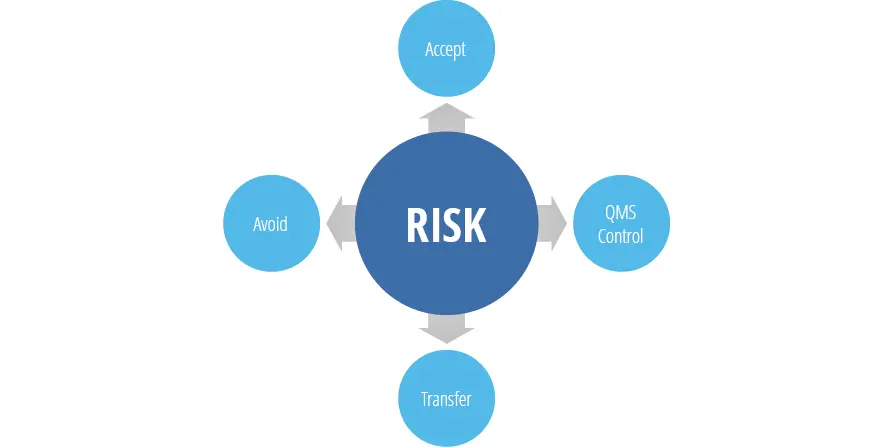
Legal documents demand precision. A minor terminological slip can jeopardize enforceability or cause delay. Adopt the practices below to reduce risk and improve acceptance rates.
1) Use MOJ-Licensed Legal Translators for Official UAE Filings
Ensure the provider’s license is valid for the required language pair. Ask for the translator’s license number on the stamp and keep copies for your file.
2) Align Language Pair and Jurisdiction
Arabic is the official language for UAE courts and most ministries. When translating from languages other than English, confirm whether an intermediate step (e.g., source language → English → Arabic) is permitted or whether direct source-to-Arabic legal translation is required.
3) Provide References and Transliteration Rules
Share accepted spellings of names, places, and corporate entities. Provide passports, trade licenses, or prior judgments for cross-referencing. Align transliteration standards early.
4) Insist on legal QA and document integrity.
Quality checks should include verification of seals, stamps, exhibit labels, numerical amounts (both figures and words), dates, and cross-references. Maintain secure handling and confidentiality, especially for sensitive litigation or M&A files.
5) Confirm Deliverable Format and Submission Channel
Some authorities accept secure e-translations; others require physical, stamped copies. Validate whether color scans, embedded QR codes, or wet-ink stamps are required for your submission.
6) Plan for Legalization Lead Times
MOFAIC appointments, embassy queues, and notary schedules can extend timelines. Begin attestation steps as early as possible in cross-border matters.
Costs, Timelines, and Working with Sim-trans
Costs and turnaround depend on language pair, complexity, and whether attestation/legalization is required. Voluminous case bundles, contracts with exhibits, or highly technical annexes (e.g., IP, medical, financial) generally take longer and require senior legal translators.
Cost and Timeline Factors
- Language pair and direction (e.g., English to Arabic vs. less common languages)
- Document type (court orders, birth certificates, audited financials, patents)
- Volume and formatting (scans, handwriting, tables, stamps, seals)
- Attestation/legalization steps (MOFAIC, consular, notary)
- Urgency (same-day/after-hours service where available)
Sim-trans Legal Translation & Interpretation Services provides structured quotations with scope, timeline, and deliverables clearly outlined. Our team in Dubai and Abu Dhabi coordinates MOJ-licensed legal translators and, when needed, notarization facilitation and legalization guidance across the UAE. If you need interpretation for hearings, depositions, or regulatory inspections, Sim-trans can also supply certified interpreters to keep your matter on track. Request a no-obligation consultation to plan the right path for your document set and deadline.
Examples: Choosing the Right Path in Common Scenarios
Scenario 1: Court Submission in Dubai
You must file a foreign-language contract and emails as exhibits. You will need a legal translation into Arabic by an MOJ-licensed legal translator. Notarization of the translation is not a substitute. Please confirm any required legalization for the original document if the underlying contract was executed abroad and needs to be proved.
Scenario 2: Corporate Registry Update in a Free Zone
Changing company officers requires Arabic legal translations of board resolutions and passports. If you signed the resolutions abroad, determine whether you need to undergo attestation and MOFAIC steps before proceeding with the legal translation.
Scenario 3: Overseas University Application
The university requests a notarized translation of your transcripts. Here, a notarized translator affidavit may be sufficient. If the destination country requires an apostille or consular legalization, plan those steps after notarization.
Scenario 4: Immigration File for a New Hire
For visa processing, Arabic legal translation of birth/marriage certificates is typically required. If certificates were issued abroad, complete legalization before legal translation. Verify exact requirements with the receiving authority.
Operational Tips for In-House Legal and Operations Teams
- Create a document matrix mapping each authority to its accepted translation type and attestation rules. Update quarterly.
- Standardize name spellings and company styles across matters to reduce rework.
- Pre-clear high-stakes submissions (e.g., tenders, court bundles) with receiving authorities to avoid last-minute surprises.
- Leverage version control: lock approved translations before notarization or court filing.
- Secure data: use encrypted channels when sharing sensitive documents with your translation provider.
Frequently Asked Questions (FAQ)
1) Can a notarized translation replace a certified legal translation in the UAE?
No. For courts and most government bodies, a notarized translation is not a substitute for a legal translation by an MOJ-licensed translator. Always follow the receiving authority’s stated requirements.
Only Ministry of Justice licensed legal translators can issue legally valid translations for use with UAE authorities. Agencies like Sim-trans work with MOJ-licensed translators for the relevant language pairs.
3) Do I need legalization (MOFAIC) before legal translation?
For foreign-issued documents, authorities often require legalization/attestation before or alongside legal translation. Review the specific authority’s sequence; Sim-trans can advise on the correct order.
4) Are e-copies of legal translations acceptable?
It depends on the authority. Some accept secure PDFs with embedded verification; others require physical stamped copies. Please ensure to verify the submission rules ahead of time
5) How fast can I obtain a legal translation?
Simple personal documents can often be turned around within 24 to 48 hours. Complex contracts, court bundles, or technical exhibits require more time. Urgent options may be available on request.
Conclusion: Choose the Right Tool in Legal Translation, Avoid Costly Rework
In legal translation, certified translations by MOJ-licensed professionals are the gold standard for submissions to UAE authorities, while notarized translations serve distinct, often cross-border or private use cases. By confirming the destination’s rules, sequencing any required legalization, and partnering with a qualified provider, you reduce risk and keep critical matters moving.
Sim-trans Legal Translation & Interpretation Services supports legal teams across Dubai, Abu Dhabi, and the entire UAE with end-to-end coordination of legal translation, notarization facilitation, and multilingual support for hearings and negotiations. To plan your next submission or build a standard operating workflow, contact Sim-trans for a consultation. For deeper background on translation types, processes, and vendor due diligence, see the pillar resource: Complete overview: “Legal Translation Services: The Complete Guide.”