
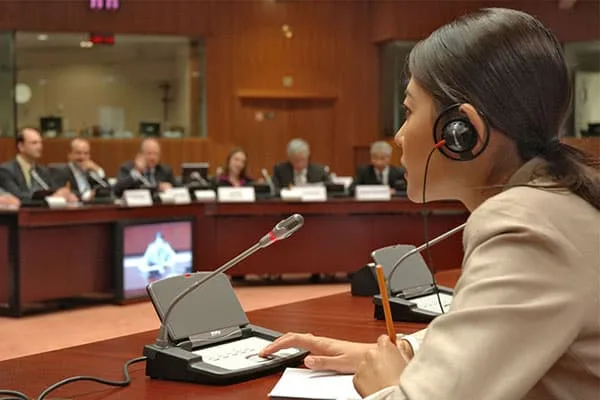
In the fast growing MICE (Meetings, Incentives, Conferences and Exhibitions) industry of Dubai, Abu Dhabi, Sharjah and Al Ain, multilingual audiences have become the norm, not the exception. Whether you are planning a high-profile government summit, an industry exhibition at Dubai World Trade Centre, a corporate retreat in Abu Dhabi, or an academic conference in Sharjah, professional interpretation services are now a core success factor not just an add-on.
This in depth guide explains how events and conference interpreting works, what MICE organizers and venues need to prepare, and how to choose the right language partner in the UAE. It builds on the broader principles covered in our main guide, “Interpretation Services: The Complete Guide to Choosing, Buying, and Succeeding”. For a full strategic overview of the different modes and use cases of interpreting, see:
Why Interpretation Services Are Critical for MICE Events
The UAE attracts delegates from the GCC, Europe, Asia and Africa to business events and conference interpreting year round. That diversity drives opportunities but also language barriers. Without reliable event interpreting, your audience may miss key points, sponsors may feel undervalued, and cross-border deals may stall.
Key Business Risks of Ignoring Professional Interpreting
- Miscommunication in negotiations: Product launches, investor pitches and MoUs discussed during conferences often involve complex legal and technical language. A misunderstanding can lead to lost contracts or even disputes.
- Poor attendee experience: Delegates who cannot follow the sessions in their preferred language will disengage, leave sessions early, or rate the event poorly.
- Brand and reputational damage: For organizers and venues in Dubai and Abu Dhabi that position themselves as global hubs, inadequate language support can undermine that image.
- Compliance and safety issues: At large exhibitions and international conventions, safety briefings and procedural announcements must be understood by everyone present.
Benefits of Getting Interpretation Right
- Higher engagement: Multilingual plenary sessions, panels and workshops encourage questions, networking and participation.
- Better ROI for sponsors and exhibitors: Clear communication leads to stronger leads, more deals and better post-event sentiment.
- Expanded audience reach: You can market your event regionally and internationally, knowing language will not be a barrier.
- Competitive edge for venues: Hotels and convention centers in Sharjah, Al Ain, Dubai and Abu Dhabi that offer plug-and-play interpretation solutions become more attractive to global organizers.
Core Types of Events and Conference Interpreting
For MICE organizers, the first step is understanding the main interpreting modes and when to use each one. Your choice will impact cost, technical setup, and delegate experience.
1. Simultaneous Interpreting
Simultaneous interpreting is the standard for medium to large conferences, international congresses and high level summits. Interpreters work in soundproof booths, listening to the speaker through headsets and delivering the interpretation in real time into delegate headsets.
Best for: Plenary sessions, keynote speeches, panel discussions, and live-streamed events in Dubai, Abu Dhabi, Sharjah or Al Ain where timing is tight and multiple languages may be required.
- Advantages: No delays in the program; delegates follow in their chosen language; ideal for multi language events.
- Considerations: Requires professional equipment (booths, consoles, headsets), technical support and highly experienced interpreters.
2. Consecutive Interpreting

In consecutive interpreting, the speaker pauses at intervals while the interpreter renders what was said in the target language, usually from notes.
Best for: Smaller breakout sessions, press conferences, technical training, bilateral meetings, and Q&A sessions where a more intimate feel is desired.
- Advantages: Minimal equipment; great accuracy; increased interaction between speakers and audience.
- Considerations: Sessions take longer, so agendas must allow for the added time.
3. Whispered Interpreting (chuchotage)

Whispered interpreting involves the interpreter sitting or standing next to one or a handful of delegates, quietly interpreting simultaneously without a booth.
Best for: VIPs or small delegations at board meetings, pitch sessions, or on-site visits during incentive trips where only a few attendees need language support.
4. Remote and Hybrid Interpreting

Many UAE events now include remote speakers or online participants. Remote interpreting is delivered over specialized platforms, integrating interpreters working off site with on site audio and video feeds.
Best for: Hybrid conferences, virtual exhibitions, or when flying in interpreters is not practical.
- Advantages: Flexibility, reduced travel costs, access to a wider pool of language experts.
- Considerations: Requires robust internet connectivity and careful technical planning.
Planning Interpretation Services for MICE Events in the UAE
To ensure smooth interpreting at your event or in your venue, treat interpretation as an integral workstream in your event management plan, not a last minute add on.
1. Map your Languages and Audiences
Start by analyzing who will be in the room and online:
- Where are your delegates traveling from (GCC, Europe, Asia, Africa)?
- Which languages are essential (e.g., Arabic, English, French, Russian, Chinese, Hindi, Urdu)?
- Do VIPs or sponsors require special language support?
- Are there parallel tracks or breakout rooms with different language needs?
A clear language matrix helps your interpretation partner determine how many interpreters and which interpreting modes you need.
2. Define Content Type and Complexity
Interpreting a legal roundtable in Abu Dhabi is very different from moderating a motivational talk in Dubai or a scientific conference in Sharjah.
- Technical Content: Engineering, energy, aviation, healthcare, legal or financial conferences require interpreters with sector expertise.
- General Business Content: Sales kick-offs, HR workshops, regional distributor events can be handled by seasoned conference interpreters with strong business vocabulary.
- Public Sector & Diplomatic Content: Government forums, cultural dialogues and bilateral talks require interpreters experienced in protocol and sensitive topics.
3. Choose Venues that Support Interpreting
If you are selecting venues in Dubai, Abu Dhabi, Al Ain or Sharjah, check early whether they can technically accommodate interpretation services:
- Existing booths or space to install mobile booths
- Ceiling or floor audio cabling, or reliable wireless systems
- Segregated channels on the sound desk for interpretation
- Quiet, properly lit cabins for interpreters with an unobstructed view of the stage
Some venues partner directly with language service providers such as Sim-trans Legal Translation & Interpretation Services to offer turnkey solutions a major advantage for busy MICE planners.
4. Align Interpreting Schedule with the Event Agenda
Professional events and conference interpreting typically work in pairs for each language in simultaneous settings, rotating every 20 to 30 minutes to maintain quality. When planning your agenda:
- Share the full program and speaker list with your interpretation provider.
- Flag high-density sessions (back-to-back keynotes, complex technical panels) that may need additional support.
- Consider breaks and handover times in long days (common at exhibitions in Dubai and Abu Dhabi).
Technical Setup: Equipment and Room Layout
Even the best interpreters cannot perform without the right technical environment. For MICE organizers and venues, understanding the basics of interpreting equipment helps you anticipate needs and avoid onsite surprises.
1. Main Components of a Simultaneous Interpreting System
- Interpreter booths: Soundproof or semi-soundproof cabins that allow interpreters to hear the speaker clearly and speak without disturbing the room.
- Interpreter consoles: Devices that let interpreters receive the floor audio, select channels and control volume and microphone.
- Transmitters and radiators: Infrared or radio-frequency transmitters that send the interpreted audio to delegates’ headsets.
- Delegate headsets and receivers: Small devices that allow attendees to select their language channel and adjust volume.
- Integration with venue AV: Connection to microphones, mixers, cameras and recording systems managed by the venue or AV supplier.
2. Room Layout Considerations for MICE Venues
- Booth placement: Ideally at the back of the hall with direct line of sight to the stage and screens. When not possible, video feeds are essential.
- Noise control: Avoid placing booths near loudspeakers or entrances to minimize interference.
- Access & safety: Ensure safe access for interpreters, wiring, and equipment, particularly in large exhibition halls.
- Signage and support desks: Clearly indicate headset distribution points and multilingual help desks for delegates.
3. Technical Rehearsals and Testing
For major conferences in Dubai, Abu Dhabi, Sharjah or Al Ain, include a dedicated sound check and interpretation test in your production schedule. In collaboration with your AV team and provider such as Sim-trans:
- Test audio levels from the stage and from remote presenters.
- Check every language channel and random headsets across the room.
- Simulate Q&A and panel discussions where multiple microphones are used.
Working Effectively With Professional Interpreters
The quality of interpretation at your event depends not only on the interpreters’ skills, but also on the preparation and collaboration between you, your speakers and your language partner.
1. Provide Preparation Materials Early
Two to three weeks before the event (or as early as possible), share with your provider:
- Final or draft agendas and session descriptions
- Speaker bios and presentation slides
- Glossaries, acronyms, and key sector terminology
- Previous years’ recordings or sample content, if available
This allows interpreters to study, research terminology and deliver accurate, fluent interpretations — especially crucial for legal, technical or medical events.
2. Brief your Speakers
Many speakers are unaware of how their style affects interpretation quality. Provide them with simple guidelines:
- Speak at a reasonable pace, particularly in non-native languages.
- Avoid reading long text quickly from slides.
- Use microphones correctly and avoid turning away while talking.
- Inform interpreters in advance about live demos, video clips or last-minute changes.
3. Coordinate with your Interpretation Project Manager
A dedicated project manager from a provider like Sim-trans Legal Translation & Interpretation Services will typically:
- Assess your event’s language and technical needs.
- Assemble qualified interpreter teams by language and subject matter.
- Oversee equipment logistics, installation and support.
- Serve as your single point of contact before, during and after the event.
How to Choose the Right Interpretation Partner for MICE Events
Not all language service providers are equally prepared for the complexity of MICE events in the UAE. Here are the key criteria organizers and venues should evaluate.
1. Experience with Large Events in the UAE
Look for proven track records in conferences, exhibitions and high profile meetings in Dubai, Abu Dhabi, Sharjah or Al Ain. Ask for case studies or references from events similar to yours in size and sector.
2. Certified and Specialized Interpreters
Conference interpreting is a highly specialized profession. Your partner should be able to provide:
- Native level fluency in target languages.
- Proven conference experience, not just ad hoc community interpreting.
- Subject matter expertise (e.g., legal, medical, financial, technical).
- Compliance with professional ethics such as confidentiality and impartiality.
3. Integrated Translation and Interpretation Services
MICE events generate more than spoken content: programs, signage, apps, contracts, handouts and post event reports also need to be localized. Working with a provider like Sim-trans that offers both translation and interpretation services across the UAE ensures consistency and simplifies vendor management.
4. Reliable Equipment and Technical Support
Ask potential partners to describe their technical capabilities:
- Do they own or manage professional-grade equipment, or do they subcontract?
- Can they support multiple parallel rooms, as is common in large Dubai and Abu Dhabi congress centers?
- Do they provide on-site technicians throughout the event?
- What backup measures are in place in case of equipment failure?
5. Transparent Pricing and Clear Scope
Request detailed quotations that distinguish between:
- Interpreter day rates per language and mode (simultaneous, consecutive, remote)
- Equipment rental (booths, headsets, consoles, transmitters)
- Technical support and installation
- Travel and accommodation (when events are outside Dubai/Abu Dhabi or spread across sites)
This clarity helps you compare providers fairly and budget accurately.
Cost Drivers of Event Interpretation Services
Understanding what drives the cost of interpretation services will help you plan more effectively and avoid surprises.
| Cost Driver | How It Affects Your Budget
|
|---|---|
| Number of languages | Each additional language usually requires a team of two interpreters and more equipment channels. |
| Event duration | Full days vs. half days, and multi-day conferences, influence interpreter and equipment rental fees. |
| Interpreting mode | Simultaneous with booths and headsets is more resource-intensive than consecutive or whispered interpreting. |
| Subject-matter complexity | Highly technical or legal content may require senior interpreters with higher rates. |
| Location & logistics | Events outside major hubs or across multiple venues may incur travel and setup costs. |
| Hybrid/remote setup | Remote platforms and streaming integration add technical requirements, but may reduce travel costs. |
Partnering early with a UAE-based provider such as Sim-trans allows you to optimize these variables without sacrificing quality.
Best Practices for Venues Hosting Multilingual Events
If you manage a hotel, convention center or specialized venue in Dubai, Abu Dhabi, Sharjah or Al Ain, preparing your infrastructure and teams for professional interpretation can significantly increase your attractiveness to international organizers.
1. Standardize AV and Interpreting Ready Layouts
- Define standard floor plans for rooms frequently used for conferences, including booth positions and cabling routes.
- Maintain venue-specific documentation showing power outlets, audio tie-lines, and recommended booth placements.
2. Train your Event and AV Teams
Ensure your staff understand the basics of interpretation services:
- Difference between translation and interpreting.
- How channels are assigned and how to coordinate with technicians.
- Standard sound checks and room setup tasks.
3. Establish Preferred Supplier Partnerships
Long term collaborations with providers like Sim-trans allow venues to develop efficient workflows, pre approved equipment configurations and package offers for organizers.
4. Offer Interpretation as a Value Added Service
Rather than waiting for clients to ask, proactively highlight your venue’s multilingual capabilities in proposals and marketing materials. This positions your property as a true international event hub.
Step-by-Step Checklist for MICE Organizers

Use this simple step-by-step list when planning interpretation at your next event in Dubai, Abu Dhabi, Sharjah or Al Ain.
- Define languages and modes: Identify which sessions need simultaneous, consecutive or whispered interpreting.
- Select venue and confirm compatibility: Ensure booths and equipment can be accommodated.
- Engage an interpretation partner early: Contact Sim-trans or your chosen provider as soon as the event concept is confirmed.
- Share program and materials: Send agendas, slides, glossaries and reference documents.
- Coordinate AV and technical logistics: Align venue, AV company and interpretation team on cabling, channels and rehearsal times.
- Brief speakers and moderators: Provide guidelines about pacing and microphone use.
- Test before opening: Run full sound and channel checks and walk through key sessions.
- Monitor during the event: Designate a point-person to liaise with the interpreting project manager for any real-time adjustments.
- Collect feedback: Include questions about interpreting quality in your post-event surveys.
- Refine for next time: Use insights to improve language planning in future editions.
FAQ: Interpretation Services for Events and Conferences

1. How far in advance should I book interpretation services for my event?
For medium to large events and conference interpreting in Dubai, Abu Dhabi, Sharjah or Al Ain, aim to reserve interpreter teams and equipment 4 to 8 weeks in advance. High-demand language combinations or very specialized topics may require even more lead time, especially during peak event seasons in the UAE.
2. How many interpreters do I need per language?
For simultaneous interpreting, the industry standard is two interpreters per language for a full conference day, working as a team in the booth. For short, low-intensity consecutive assignments (such as a brief press conference), one interpreter might be sufficient, but your provider will advise based on your specific agenda.
3. Can I use my own AV company and only hire interpreters?
Yes, but coordination is crucial. Many MICE organizers in the UAE choose a provider like Sim-trans that can either supply a full turnkey solution (interpreters to equipment to technicians) or work seamlessly with your preferred AV partner to avoid compatibility issues.
4. What languages are most commonly requested in UAE events?
The most requested combinations typically include Arabic to English, along with growing demand for French, Russian, Chinese, German, Hindi and Urdu. However, major international congresses in Dubai and Abu Dhabi often require several additional European and Asian languages.
5. Are remote and hybrid interpretation solutions reliable?
When properly planned and supported, remote and hybrid interpreting can be highly reliable and cost effective. The key is using professional grade platforms, ensuring solid internet connectivity at both venue and interpreter locations, and working with an experienced provider that has successfully delivered similar hybrid events in the region.
Conclusion: Elevating UAE MICE Events With Professional Interpretation Services
In a market as globally connected as Dubai, Abu Dhabi, Sharjah and Al Ain, professional interpretation services are central to delivering world-class MICE events. They safeguard understanding, enhance delegate experience, and support the business outcomes your sponsors and exhibitors expect.
By planning early, choosing the right interpreting modes, aligning venues and AV, and partnering with an experienced language provider, you transform potential language barriers into a competitive advantage. As a UAE-based specialist with offices in Dubai and Abu Dhabi and coverage across the entire country, Sim-trans Legal Translation & Interpretation Services supports organizers and venues with certified conference interpreters, robust equipment solutions and end-to-end multilingual event support.
To understand how event interpreting fits into your broader language strategy from business meetings to legal proceedings and beyond explore our main resource:
Complete overview: “Interpretation Services: The Complete Guide to Choosing, Buying, and Succeeding.”
When you are ready to plan your next multilingual events and conference interpreting, exhibition or corporate summit in the UAE, consider consulting Sim-trans early in the process to design the most efficient, high impact interpretation setup for your event.