
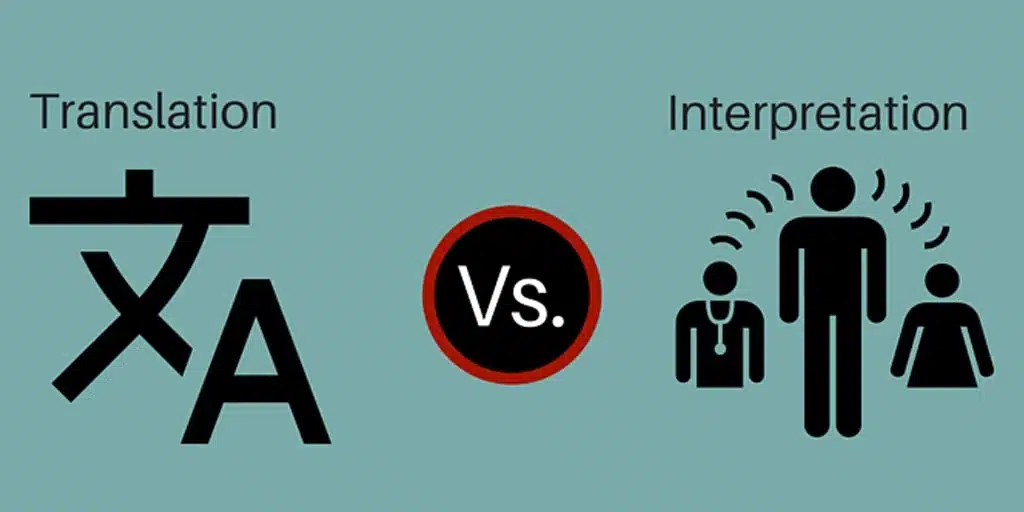
Choosing between legal interpretation vs legal translation can make or break the success of your case, contract, or cross-border deal. While both disciplines bridge language gaps in law, they solve different problems, follow different workflows, and require different credentials. In this guide, we clarify the distinction, map common UAE use cases, and give you a practical framework to select the right modality for your matter in Dubai, Abu Dhabi, Al Ain, or Sharjah. If you are comparing providers, Sim-trans Legal Translation & Interpretation Services can advise you on the appropriate path and deliver both services under one roof. For a broader overview of services, see the pillar piece here: Complete overview: “Legal Translation Services: The Complete Guide.”
What Each Modality Actually Does
What is Legal Translation?
Legal translation is the written, word-for-word (but context-aware) conversion of legal content from one language into another. It covers contracts, court filings, notarial documents, powers of attorney, memoranda of association, articles of incorporation, immigration files, evidentiary exhibits, and compliance policies. The goal is precise equivalence: the target text must carry the same legal effect, obligations, and risks as the source. In the UAE, legal translation often also implies a certified output accepted by public bodies, notaries, and courts, this is where provider accreditation, stamps, and formatting standards matter.
What is Legal Interpretation?
Legal interpretation is spoken language mediation in real time. It enables parties who do not share a language to communicate accurately and efficiently during proceedings or meetings. Typical formats include simultaneous interpretation (common in conferences and multi party hearings), consecutive interpretation (used in depositions, client interviews, or witness examinations), and whispered/chuchotage for small settings. Accuracy, neutrality, and speed are critical. Courtrooms, arbitration hearings, police interviews, notary appointments, and board meetings often require legal interpreters in Dubai, Abu Dhabi, Al Ain, and Sharjah.
Where They Overlap and Where They do Not
Both modalities require strong legal knowledge, terminology mastery, confidentiality, and cultural competence. However, they are not interchangeable. A court may need legal interpretation vs legal translation to question a witness today, then legal translation for the written judgment tomorrow. Selecting the wrong modality leads to inefficiency (for example, reading a translated contract aloud to a party instead of engaging an interpreter) or non compliance (for example, using a non-certified translation for official submission).
High Stakes UAE Use Cases: Which One Do You Need?

The right choice often depends on your forum, goal, and deadline. Below are typical scenarios across UAE jurisdictions where one modality is preferable.
- Court hearings in Dubai, Abu Dhabi, Al Ain, Sharjah: Engage legal interpretation vs legal translation for live testimony, preliminary hearings, witness examinations, and oral submissions. Any written exhibits submitted should undergo legal translation beforehand to ensure judges and opposing counsel can rely on the documents.
- Notary Public appointments: Bring a legal interpreter when signatories need assistance to understand the act in real time. Prepare certified legal translation of the deed, power of attorney, or affidavit before the appointment so the notary can review the written document.
- M&A or joint venture closings: Use legal translation to align bilingual versions of share purchase agreements, company resolutions, and regulatory filings. Use interpretation during negotiations, closing calls, and board briefings.
- Arbitration and mediation: Employ legal interpretation for hearings and caucuses; ensure all pleadings, witness statements, and awards undergo legal translation as required by the tribunal or enforcement venue.
- Compliance and HR policies: Rely on legal translation for employment contracts, workplace policies, and data protection notices so staff across the UAE receive consistent, enforceable documents.
- Conferences and industry events: Provide simultaneous interpretation for panels and keynotes; distribute legally translated summaries, terms of participation, and consent forms for attendees.
Legal Interpretation vs Legal Translation: A Side-by-Side Comparison
| Dimension | Legal Translation | Legal Interpretation
|
|---|---|---|
| Medium | Written documents | Spoken communication |
| Timing | Asynchronous; allows research and review | Real-time or near real-time |
| Output | Finalized text (often certified or notarized) | Interpreted speech; optional audio/video recording policies apply |
| Quality Assurance | Revision, editing, terminology control, certification | Pre-briefing, glossary prep; on-site/remote monitoring |
| Typical Contexts | Contracts, pleadings, court orders, corporate docs, immigration | Hearings, depositions, notary sessions, negotiations, conferences |
| Provider Credentials | Certified legal translators; MOJ/authority acceptance | Qualified legal interpreters; court/authority clearance |
| Turnaround | Hours to days depending on length/complexity | Minutes to hours in session; setup and briefing required |
| Technology | CAT tools, terminology databases, secure DTP | RSI platforms, interpreter consoles, headsets, booths |
| Risk Profile | Ambiguity in wording; non-acceptance without certification | Misinterpretation in fast exchanges; fatigue; acoustics |
Step-by-Step Framework: Selecting the Right Modality
1. Define your Objective
Do you need an authoritative written record for filing or signing? Choose legal translation. Do you need parties to communicate now? Choose legal interpretation vs legal translation.
2. Map the Audience and Venue
Courts, notaries, ministries, and arbitral institutions may require certified legal translation for written submissions, and qualified interpreters for live sessions.
3. Check Regulatory and Acceptance Rules
Confirm if your target authority in Dubai, Abu Dhabi, Al Ain, or Sharjah requires certified outputs or specific interpreter credentials.
4. Determine Languages and Variants
Arabic-English is the most common pair in the UAE, but be precise about dialects or regional legal terminology if applicable (e.g., French to Arabic for certain contracts or Russian-English for corporate filings).
5. Assess Confidentiality and Data Sensitivity
If materials include trade secrets or personal data, ensure your provider follows confidentiality agreements, secure platforms, and data minimization.
6. Set Timelines and Session Logistics
For legal translation, provide editable files and plan for review buffers. For interpretation, book early, share agendas, provide glossaries, and determine on-site versus remote setups.
7. Align Budget with Risk
Critical filings, court submissions, and high value negotiations merit specialized experts. Discuss certified legal translation costs per page versus hourly/daily interpreter rates, equipment, and RSI platform fees.
8. Choose a Provider that Offers Both
An integrated partner like Sim-trans Legal Translation & Interpretation Services can handle mixed needs (documents plus hearings) with consistent terminology and one point of accountability.
Source:
[1] UAE Ministry of Justice. (n.d.-b). moj.gov.ae. Retrieved January 6, 2026, from https://www.moj.gov.ae/en/home.aspx
Quality, Compliance, and Risk Management
Legal communication tolerates no ambiguity. Whether you commission legal translation or legal interpretation, quality and compliance safeguards are non-negotiable in the UAE.
1. Certification and Acceptance
Many UAE authorities require certified legal translation, which includes specific formatting, stamps, and translator credentials. Make sure your provider’s certifications are current and recognized by the relevant authority where you will submit documents. Similarly, courts and tribunals may require interpreters who meet specified qualifications or are pre-approved.
2. Terminology and Consistency
Precision demands standardized terminology. For translation, request a bilingual glossary and style guide. For interpretation, share agendas, names, and exhibits in advance so interpreters can prepare. If your case spans months, ask your provider to maintain a termbase to ensure continuity across filings, hearings, and negotiations.
3. Confidentiality and Data Security
Ensure NDAs cover translators and interpreters, as well as any technicians operating equipment for remote simultaneous interpretation. Confirm encryption for file transfers, access controls for virtual platforms, and data retention policies. For legally privileged documents, request restricted teams and audit trails.
4. Review and After Action Improvements
For legal translation, build in review cycles with your counsel to spot jurisdiction-specific nuances. For interpretation, conduct short debriefs to refine glossaries and improve acoustics and turn-taking for future sessions. These continuous improvements pay off in long, complex disputes or transactions.
Technology: Helpful but Not a Substitute for Expertise
Modern tools raise quality and efficiency, but expert oversight remains essential.
- Translation technology: Computer-assisted translation (CAT) tools, secure terminology databases, and QA checkers improve consistency across large volumes. However, machine output must never be used unreviewed for legal translation; post editing by qualified legal translators is required for any MT-assisted workflow.
- Interpretation technology: Remote simultaneous interpretation (RSI) platforms, soundproof booths, interpreter consoles, and ISO-compliant headsets can support events in Dubai and Abu Dhabi, and hybrid hearings in Al Ain and Sharjah. Always conduct technical tests and assign a technician to monitor feeds, channels, and recordings.
- Security by design: Choose platforms with end-to-end encryption, role-based access, and data localization options compliant with local regulations and your organizational policies.
Pricing and Timelines: What to Expect in the UAE

Pricing reflects complexity, urgency, specialization, and credentialing. While specific quotes require scoping, expect the following dynamics:
- Legal translation: Usually priced per word or per page for certified outputs, with surcharges for urgent turnarounds, complex formatting, or specialized domains (e.g., maritime, energy, construction arbitration).
- Legal interpretation: Typically billed per hour or per day. Simultaneous interpretation requires two interpreters per language pair for sessions exceeding recommended durations to manage cognitive load. Factor in equipment and technician costs for conferences or court like setups.
- Timeline drivers: For translation, editable files and early glossary confirmation accelerate delivery. For interpretation, early booking unlocks the best interpreters and ensures equipment availability, notably during peak conference seasons in Dubai and Abu Dhabi.
Examples: Modality Decisions in Real UAE Scenarios
- Dubai notary PoA: A foreign principal signs a power of attorney. Prepare a certified legal translation of the PoA text; book a consecutive interpreter for the appointment so the principal understands each clause before signing.
- Abu Dhabi civil claim: Written evidence and prior correspondence are in French. Commission legal translation to Arabic or English for submission; arrange interpretation for the hearing when expert witnesses testify.
- Al Ain branch incorporation: Company bylaws and board resolutions need bilingual alignment. Secure legal translation of foundational documents; use interpretation in board calls to finalize terms.
- Sharjah industry summit: Multilingual panels require simultaneous interpretation across multiple rooms; provide legally translated waivers, NDAs, and speaker releases for participants.
Working with Sim-trans Legal Translation & Interpretation Services
Sim-trans Legal Translation & Interpretation Services is a UAE-based provider with offices in Dubai and Abu Dhabi and coverage across Al Ain and Sharjah. The team delivers certified legal translation for courts, ministries, and notaries, as well as expert legal interpretation vs legal translation for hearings, investigations, conferences, and high stakes corporate meetings. Whether you require a single notarized Arabic translation or a turnkey multilingual conference setup with booths and RSI, Sim-trans can scope, resource, and manage the entire engagement.
How Sim-trans Adds Value
- Integrated offering: One partner for legal translation and legal interpretation, ensuring consistent terminology and fewer project handoffs.
- UAE authority alignment: Processes designed around local acceptance criteria and timelines in Dubai, Abu Dhabi, Al Ain, and Sharjah.
- Secure workflows: NDA backed teams, encrypted file handling, vetted RSI platforms, and event-grade equipment.
- Proactive preparation: Glossaries, case briefings, and document mapping to reduce surprises on the day of submission or hearing.
Considering a matter that blends both modalities a document heavy arbitration with multilingual hearings, for example? Sim-trans can assign a dedicated project manager to coordinate translators, interpreters, and technicians, saving you time while maintaining quality.
FAQs: Common Questions About Modality Selection

Q: Do I need legal translation or an interpreter for a UAE notary appointment?
Usually both. The document to be notarized often requires certified legal translation, and a qualified interpreter helps ensure signatories fully understand the text during the appointment.
Q: Will a bilingual staff member suffice for a court hearing or negotiation?
Generally no. Legal proceedings and high-stakes negotiations call for trained legal interpreters who understand procedure, terminology, and ethics. Similarly, legal translation of documents should be completed by certified professionals whose outputs are accepted by relevant authorities.
Q: Can one provider handle both legal translation and legal interpretation?
Yes. Sim-trans Legal Translation & Interpretation Services routinely manages mixed matters. Using one provider helps maintain consistent terminology, improves scheduling, and streamlines accountability.
Q: Is machine translation acceptable for contracts or court filings?
Not by itself. Machine translation can introduce errors or confidentiality risks. For legal translation, expert human translators must produce or thoroughly post-edit the text, with certification when required.
Q: Can you support remote proceedings across emirates?
Yes. Sim-trans supports remote simultaneous interpretation for hybrid hearings and virtual meetings, and can coordinate equipment and secure platforms for participants in Dubai, Abu Dhabi, Al Ain, and Sharjah.
Key Takeaways
- Use legal translation for authoritative written records and official submissions; request certification where required.
- Use legal interpretation for real-time spoken communication in hearings, interviews, and conferences.
- Many matters need both: translate documents in advance; interpret during live interactions.
- Plan early, share materials, and verify acceptance rules with the relevant UAE authority.
Conclusion: Choose the Modality that Matches the Mission
The right choice between legal interpretation vs legal translation hinges on your immediate goal, your audience, and local acceptance rules. When documents must carry legal force, prioritize certified legal translation. When parties must understand and respond in real time, book qualified legal interpreters. If your matter spans both, coordinate them together to preserve consistency and save time. For expert guidance and delivery in Dubai, Abu Dhabi, Al Ain, and Sharjah, contact Sim-trans Legal Translation & Interpretation Services to scope your needs and schedule support. To explore the broader landscape of services, see the pillar guide here: Complete overview: “Legal Translation Services: The Complete Guide.”