
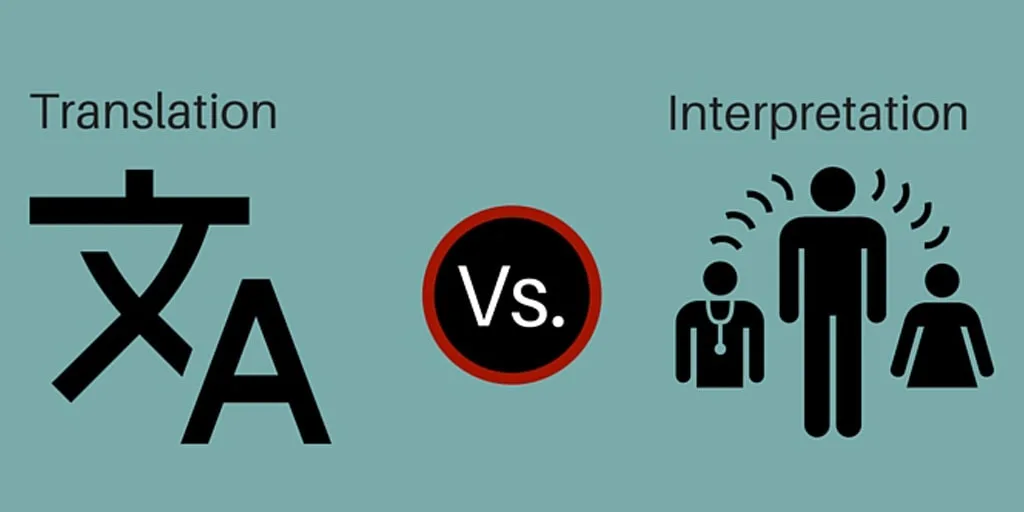
When you start exploring professional interpretation services for your business in Dubai, Abu Dhabi, Sharjah, or Al Ain, you will quickly come across two terms that sound similar but mean very different things: live interpreter vs live translation. Choosing the wrong one can lead to misunderstandings, unhappy delegates, and wasted budget. Choosing correctly can transform your meetings, events, and legal proceedings into seamless multilingual experiences.
This guide explains the key differences between live interpretation and live translation, where each fits best, and how to decide what you really need for your specific use case. It is a focused companion to our main guide, “Interpretation Services: The Complete Guide to Choosing, Buying, and Succeeding”.
What Is the Difference Between a Live Interpreter vs Live Translation?
The terms are often used interchangeably, but they refer to different professional solutions. Understanding this distinction is the first step to buying the right interpretation services for your organisation in the UAE.
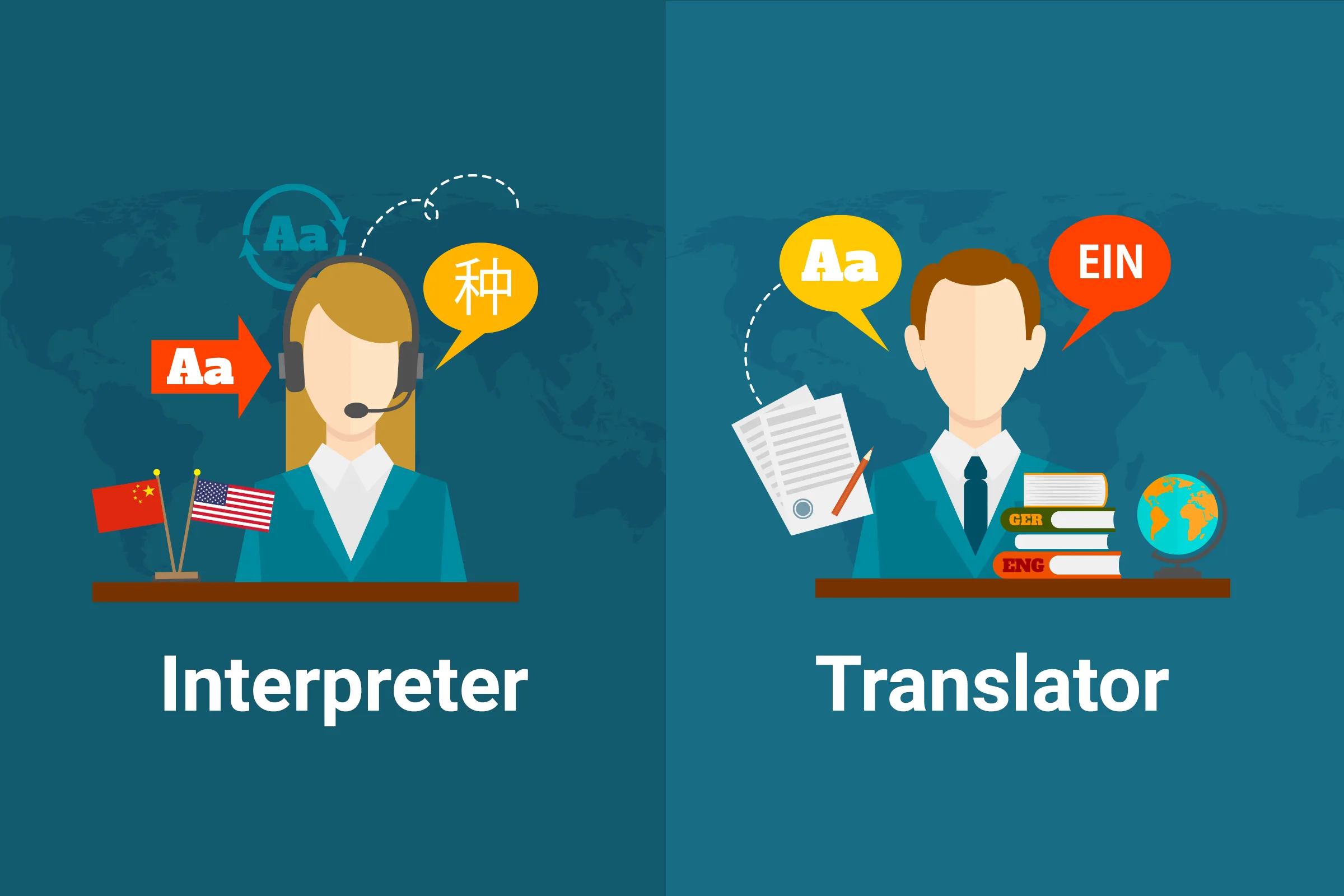
Live Interpreter: Real-Time Spoken Communication
A live interpreter is a trained language professional who listens to a speaker in one language and renders the message orally into another language in real time. The primary focus is on spoken communication, interaction, and preserving intent, tone, and nuance.
Live interpreters typically work in settings such as:
- Business meetings, negotiations, and board sessions
- Conferences, seminars, and workshops
- Legal settings (hearings, arbitrations, client–lawyer meetings)
- Government and diplomatic meetings
- Medical appointments and insurance consultations
In Dubai, Abu Dhabi, and other UAE hubs, interpreters are crucial for bridging communication between Arabic and languages such as English, Russian, Chinese, French, and many more.
Live Translation: On-the-Spot Rendering of Written Text
Live translation usually refers to instant, ad-hoc translation of written content during a live situation. Instead of interpreting speech, the linguist or technology translates text in real time.
Examples of live translation include:
- Real-time translation of chat messages during a virtual meeting
- Live captioning or subtitles of a speech displayed on screens
- On-the-spot translation of documents or presentation slides during a meeting
- Website or app content automatically translated while a user browses
Live translation can be performed by a human translator, by software, or by a hybrid approach. It is especially common in virtual events, webinars, and digital platforms.
Live Interpreting vs. Live Translation at a Glance
| Aspect | Live Interpreter (Interpretation) | Live Translation
|
|---|---|---|
| Main focus | Spoken communication | Written text (chat, captions, documents) |
| Modality | Oral / sign language | Text on screen or written documents |
| Best for | Meetings, legal proceedings, conferences, live discussions | Virtual events, webinars, websites, live chat, slides |
| Interaction | Two-way, conversational | Often one-way, less interactive |
| Technology needs | Headsets, booths, microphones (for larger events) | Screens, captioning software, translation platforms |
| Typical provider | Professional interpreter or interpretation agency | Translator, captioner, or translation technology |
Why the Distinction Matters for Your Event or Case
Mislabeling these services can create confusion internally and with vendors. More importantly, it can lead you to purchase a solution that does not match your communication goals.
Impact on Objectives and Outcomes
If your objective is to enable two-way dialogue between Arabic-speaking and English-speaking participants in a board meeting in Dubai, you need interpretation services provided by a skilled live interpreter. Using only live translated captions would allow attendees to read what is being said but would not help them speak back confidently and be understood.
Conversely, if your objective is to make a keynote speech accessible to a multilingual audience at a Sharjah conference, live translation of captions on large screens may be sufficient and more cost-efficient than providing simultaneous interpreting into many languages.
Impact on Budget and Logistics
Live interpreting and live translation have very different cost drivers:
- Interpreting costs depend on language pair, subject complexity, duration, and whether you need simultaneous or consecutive interpreting, plus equipment for large venues.
- Live translation costs revolve around minutes of content, number of languages, platform integration, and whether you use human linguists or AI tools supervised by professionals.
In cities like Abu Dhabi or Al Ain, venue layout, internet infrastructure, and the profile of your attendees will further shape which solution is more practical.
Main Types of Live Interpretation Services
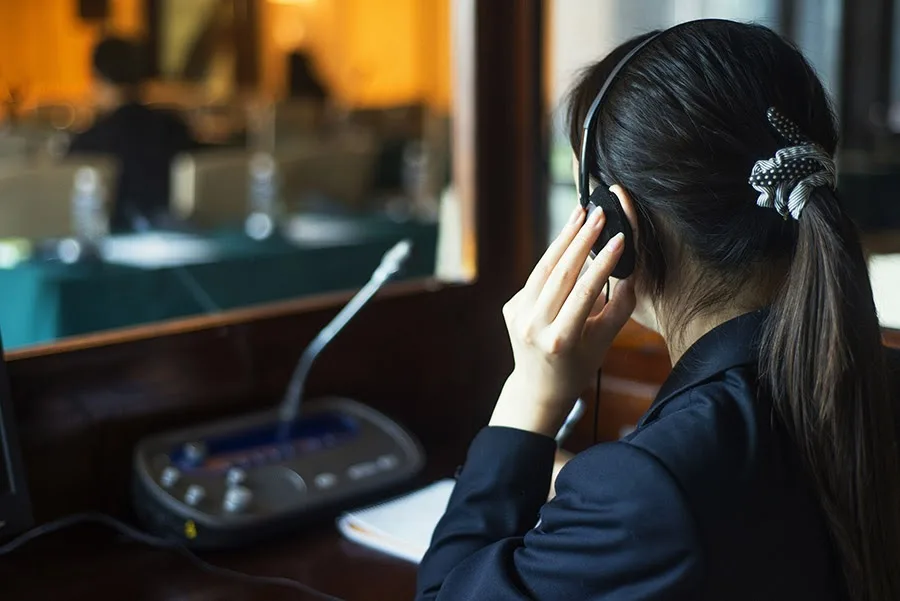
To understand when to choose a live interpreter instead of relying purely on live translation, it helps to know the major modes of interpretation. These are the core services offered by professional providers such as Sim-trans Legal Translation & Interpretation Services across the UAE.
1. Simultaneous Interpretation
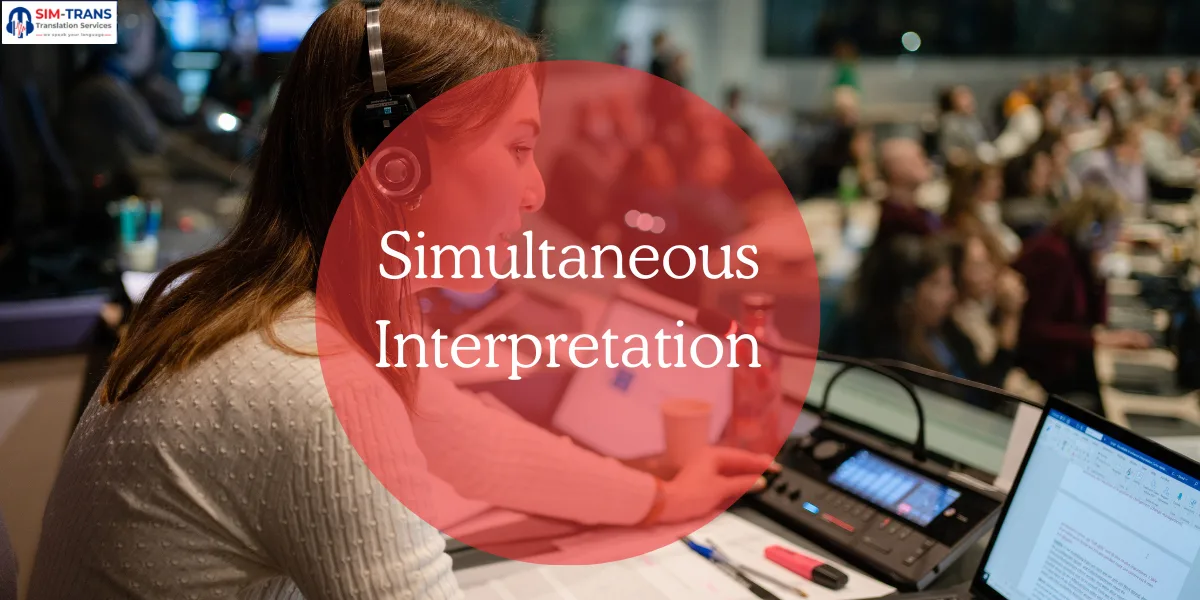
Simultaneous interpretation happens almost instantly: the interpreter listens through a headset and speaks the translation into a microphone while the speaker continues talking. Listeners hear the interpreted language via headsets.
Best suited for:
- International conferences and congresses
- Large corporate events and product launches
- High-level diplomatic or governmental meetings
In Dubai and Abu Dhabi, simultaneous interpretation is common in events hosted at major hotels, exhibition centres, and government venues. It usually requires professional interpreting booths, audio equipment, and specialised technicians.
2. Consecutive Interpretation
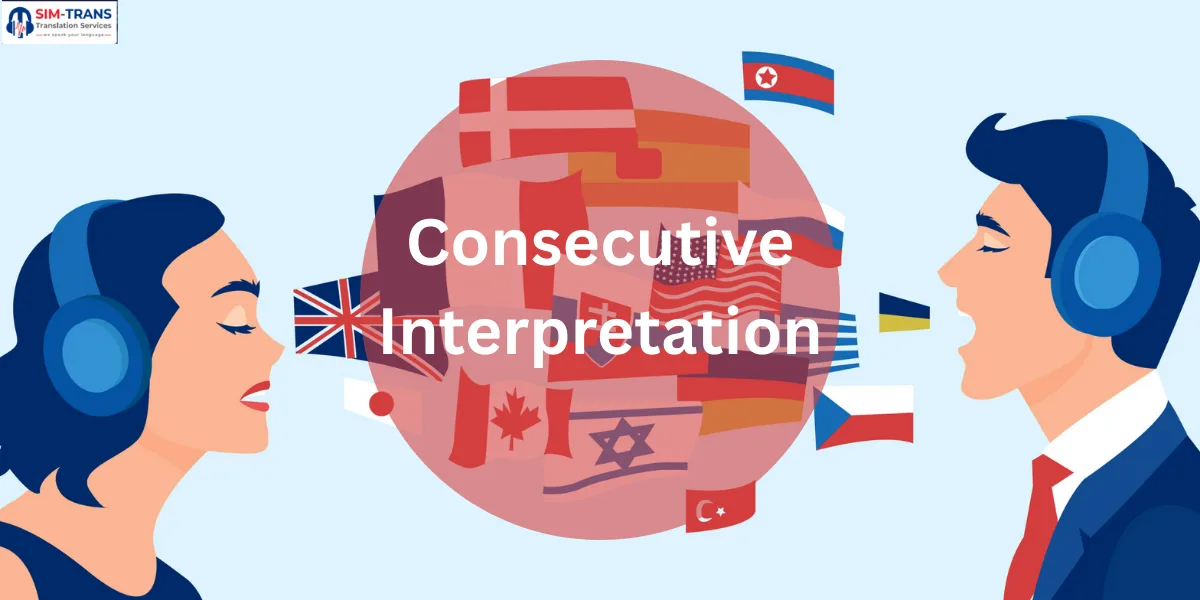
Consecutive interpretation is delivered after the speaker pauses. The speaker talks for short segments, then the interpreter renders what was said into the target language.
Best suited for:
- Business meetings and negotiations
- Small training sessions and workshops
- Interviews and press conferences
- Some legal and medical appointments
This mode often requires less equipment and is ideal for smaller groups or confidential settings where subtlety and nuance are critical.
3. Whispered Interpretation (Chuchotage)
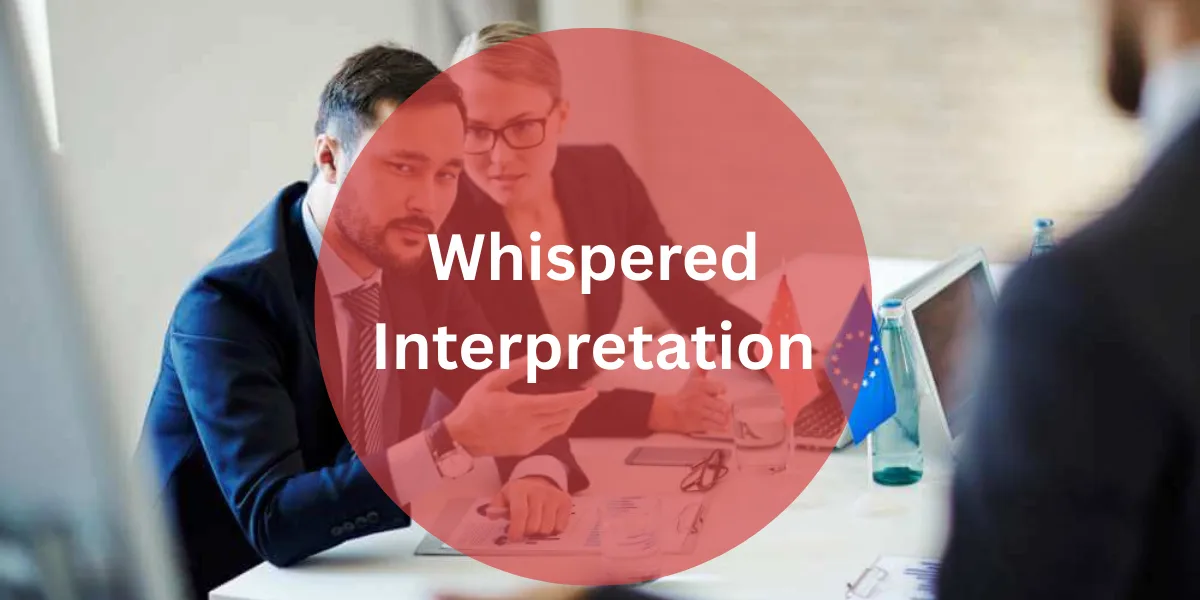
In whispered interpretation, the interpreter sits or stands very close to one or two listeners and whispers the translation simultaneously.
Best suited for:
- Board meetings with one or two foreign delegates
- VIP site visits or inspections
- Small legal or financial meetings
This is a discreet form of interpretation services that requires minimal equipment and works well when only a few people need language support.
4. Remote Interpretation
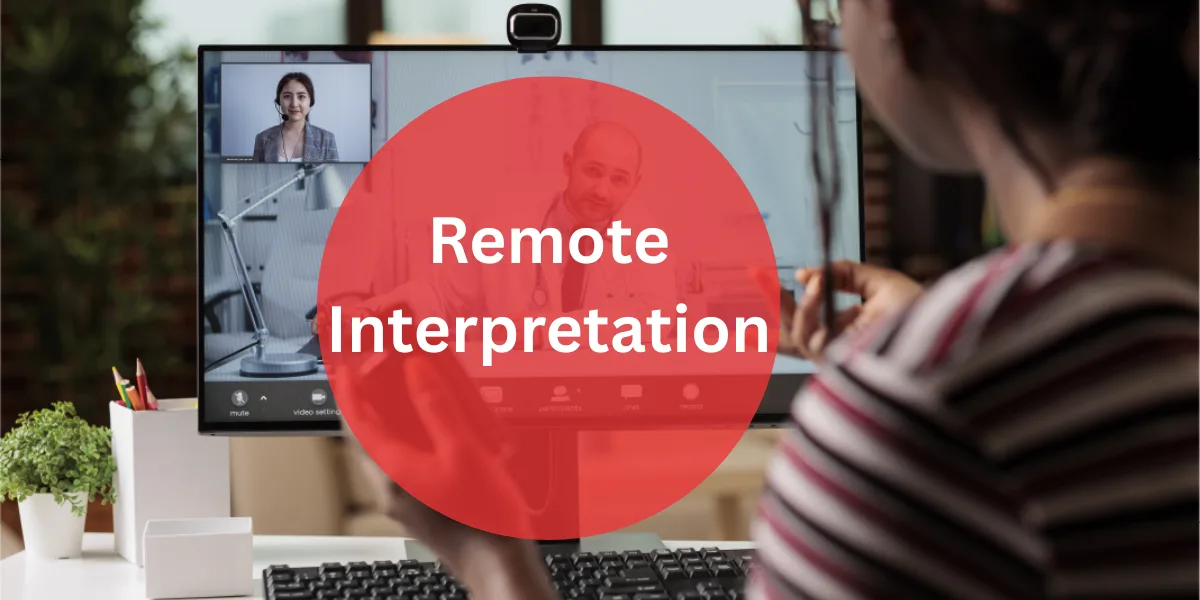
Remote interpretation leverages online platforms so that the interpreter can work from another location. Participants join via phone or video conference.
Best suited for:
- Virtual meetings with international teams
- Hybrid conferences with onsite and remote attendees
- Urgent consultations when an interpreter cannot travel in time
Sim-trans Legal Translation & Interpretation Services frequently provides remote interpreting for organisations in Sharjah and Al Ain that collaborate with partners outside the UAE, enabling high-quality multilingual communication without travel costs.
Forms of Live Translation and How They Are Used
While interpretation services focus on spoken language, live translation addresses written content during real-time interactions. Understanding what is available helps you design the right mix of solutions for your event or workflow.
Real Time Captioning and Subtitling
Real-time captioning displays the spoken words as text on screens or user devices. When combined with translation, captions can be shown in multiple languages simultaneously.
Use cases:
- Keynote speeches at conferences in Dubai where participants come from multiple countries
- Webinars and online events that need accessibility for non native speakers
- Events where sound must be low (e.g., trade fairs, exhibitions)
Real-time captioning can be produced by human professionals (stenographers, respeakers) or AI tools, often with human review to ensure accuracy.
Live Translation in Virtual Meeting Platforms
Many video conferencing tools now offer live translation for chat messages, polls, and Q&A. This is particularly helpful when participants type questions or comments in their own language.
Use cases:
- Internal town halls for multinational companies headquartered in Abu Dhabi
- Online training for distributed teams across the GCC and beyond
- Customer support webinars involving end users from multiple markets
These features are often supplemented by remote interpreting for the actual spoken audio, creating a comprehensive multilingual experience.
On the Spot Document Translation
Sometimes you need a contract clause, presentation slide, or legal document translated immediately during a meeting or negotiation. A professional translator or interpreter with strong drafting skills can provide live document translation.
Use cases:
- Legal negotiations where Arabic and English versions must be aligned before signing
- Technical project meetings that involve drawings, specifications, or manuals
- Business deals in Dubai Free Zones where bilingual documentation is required
In these situations, accuracy and legal validity are crucial. Working with a certified provider such as Sim-trans Legal Translation & Interpretation Services ensures the translated text can be relied upon later.
Choosing Between Live Interpreter vs Live Translation: A Practical Framework
To determine whether you need a live interpreter, live translation, or a combination, assess your requirements across the following dimensions.
1. Purpose of the Event or Interaction
- Dialogue and negotiation: If participants must speak and respond actively, you almost certainly need live interpreting.
- One-way presentations: For content-heavy talks where interaction is limited, live translation of captions may be sufficient.
- Compliance and risk: For legal hearings, witness interviews, and regulatory meetings in the UAE, professional human interpreters are strongly recommended.
2. Audience Size and Language Mix
- Small groups (2–10 people): Consecutive or whispered interpreting is often the best fit.
- Medium to large events (50+ participants): Simultaneous interpreting plus optional translated captions can serve diverse language needs.
- Many language pairs: You may combine interpretation into key languages with live translated captions into additional languages.
3. Content Complexity and Risk Level
- High-risk content (legal, medical, financial, governmental): Always prioritise experienced human interpreters and translators.
- Marketing or internal updates: A mix of professional interpreters and supervised AI-based live translation may be acceptable.
- Technical presentations: Choose interpreters with subject-matter expertise; captions alone may not capture nuances.
4. Budget, Time, and Infrastructure
If your venue in Sharjah or Al Ain offers limited space or audio infrastructure, you might favour remote interpretation or whispered interpreting. For large conference venues in Dubai and Abu Dhabi, full simultaneous interpreting with booths and receivers will provide a more polished experience.
For organisations looking to optimise cost without compromising clarity, Sim-trans can design hybrid solutions that combine interpreting for core sessions with live translation for supporting content such as chat, Q&A, and documentation.
Real-World Scenarios in the UAE: Which Service Works Best?
The following scenarios illustrate how the theory applies to real business and legal contexts across the UAE.
Scenario 1: International Arbitration in Dubai
An international arbitration seated in Dubai involves Arabic-speaking witnesses and English speaking counsel and arbitrators. Testimony must be understood clearly and accurately in both languages.
Recommended solution:
- Professional consecutive or simultaneous interpreting (depending on the tribunal’s preference)
- On-the-spot document translation for exhibits and submissions
Here, live translation of captions alone is insufficient because participants must question witnesses, object, and debate in real time.
Scenario 2: Corporate Town Hall in Abu Dhabi
A multinational energy company headquartered in Abu Dhabi hosts a town hall to share strategic updates with employees from across the GCC. The CEO speaks English; many employees are more comfortable in Arabic, Hindi, or Urdu.
Recommended solution:
- Simultaneous interpreting into Arabic
- Live translated captions into additional languages displayed on screens or in the webcast
This combination ensures maximum comprehension while keeping the event dynamic and inclusive.
Scenario 3: Sales Negotiation in Sharjah
A Sharjah-based manufacturer negotiates a distribution agreement with a French company. The decision-makers speak Arabic and French, with limited English.
Recommended solution:
- Consecutive or whispered interpreting between Arabic and French
- Live translation of contract clauses as they are discussed
Professional interpreters and translators help avoid misunderstandings that could derail the deal or lead to disputes later.
Scenario 4: Public Conference in Al Ain
A university in Al Ain organises a regional conference on sustainable agriculture, attracting researchers from across the Middle East, Europe, and Asia.
Recommended solution:
- Simultaneous interpreting between English and Arabic for plenary sessions
- Live English captions for keynote speeches, optionally translated into other languages
This approach supports both accessibility and accurate knowledge transfer across borders.
Working with a Professional Provider: What to Expect

Whether you require a live interpreter, live translation, or both, partnering with an experienced language services provider will greatly reduce risk and complexity.
Discovery and Needs Analysis
A reputable provider such as Sim-trans Legal Translation & Interpretation Services will begin with a detailed consultation to understand:
- Your objectives and audience profile
- Languages required and expected volume
- Event format (in-person, virtual, hybrid) and venue details
- Confidentiality, legal, or technical requirements
This step ensures that you are guided toward the right combination of interpretation services and live translation tools.
Service Design: Matching Modes to Use Cases
Based on your needs, the provider will design a tailored solution that might include:
- Simultaneous or consecutive interpreting in specific language pairs
- Interpreting teams (rotation for long events)
- Onsite or remote delivery
- Live captioning and translated subtitles
- Instant document translation support
For corporate clients in Dubai and Abu Dhabi, this often involves a mix of onsite interpreters and remote language teams to cover multiple regions.
Technical Setup and Rehearsal
For live interpreting and translation to work smoothly, technology must be tested in advance:
- Audio quality checks for microphones, headsets, and booths
- Connectivity and platform configuration for remote sessions
- Screen and projector tests for captions and translated text
- Run-throughs with speakers and moderators
During the Event: Coordination and Quality Assurance
Professional teams manage the process end-to-end, including:
- Interpreter rotations and handovers
- Real-time troubleshooting of audio or caption feeds
- Monitoring of translation quality and audience feedback
For sensitive legal or governmental events, additional confidentiality safeguards such as NDAs, secure connections, and controlled access are implemented.
How Sim-trans Supports Live Interpreter vs Live Translation Across the UAE
Sim-trans Legal Translation & Interpretation Services is a UAE-based company with offices in Dubai and Abu Dhabi, serving clients across Sharjah, Al Ain, and the wider region. Their teams provide:
- Certified legal translation of documents in Arabic and many other languages
- Onsite and remote live interpreters for conferences, hearings, and meetings
- Technical and business interpreting for sectors such as energy, construction, finance, and healthcare
- Support for live captioning, subtitles, and instant document translation during events
By combining deep linguistic expertise with an understanding of UAE legal and business environments, Sim-trans helps organisations avoid costly misunderstandings and project delays.
If you are planning an event or legal proceeding and are unsure whether you need live interpreters, live translation, or both, their consultants can guide you through the options and design a solution aligned with your goals and budget.
FAQ: Live Interpreter vs Live Translation
1. Do I always need a live interpreter for multilingual events?
Not always. If your event is mainly one-way communication for example, a keynote speech or webinar live translated captions may be enough. However, if attendees must ask questions, negotiate, or participate in discussions, professional interpretation services are strongly recommended.
2. Is live translation by AI tools accurate enough for legal or medical content?
Current AI tools can assist with speed and convenience, but they are not reliable enough for high-risk content without human oversight. For legal, medical, or regulatory matters in the UAE, you should work with certified human interpreters and translators, often complemented by technology but never replaced by it.
3. How far in advance should I book interpreters for events in Dubai or Abu Dhabi?
For large conferences or events requiring multiple language pairs, booking 4 to 8 weeks in advance is advisable, especially during peak seasons. Smaller meetings can sometimes be arranged with shorter notice, but availability of specialised interpreters may still be limited.
4. Can one interpreter handle both live interpreting and live document translation during a meeting?
In smaller, less intense meetings, a highly skilled interpreter may occasionally switch between interpreting and translating short documents. However, for complex negotiations or lengthy contracts, it is safer to assign dedicated professionals for each task to maintain quality and accuracy.
5. Are interpretation services available for hybrid events with both onsite and remote attendees?
Yes. Many organisations in Sharjah, Al Ain, and other UAE cities now run hybrid events. Professional providers such as Sim-trans can combine onsite booths and equipment with remote interpreting platforms, ensuring that both in-room and online participants benefit from seamless multilingual support.
Conclusion: Choosing the Right Solution for Your Multilingual Communication
The distinction between a live interpreter vs live translation is more than terminology. It directly affects how effectively your message is delivered, how confidently your participants communicate, and how safely you navigate legal and commercial risks.
Use live interpreters whenever real time, two way spoken communication is essential such as negotiations, legal hearings, or interactive conferences. Rely on live translation to support written content, captions, and documents in scenarios where reading is sufficient or where you want to complement interpreting with additional accessibility.
For organisations in Dubai, Abu Dhabi, Sharjah, and Al Ain, partnering with an experienced provider like Sim-trans Legal Translation & Interpretation Services ensures that you receive the right mix of interpretation services and live translation tools for your unique needs. To explore the full range of options and best practices, consult our main guide: Complete overview: “Interpretation Services: The Complete Guide to Choosing, Buying, and Succeeding.”
If you are planning an event, negotiation, or legal proceeding and want expert support in designing the right multilingual communication strategy, reach out to Sim-trans for a tailored consultation.