
Selecting an appropriate language partner can significantly impact the success of a multilingual event, negotiation, or broadcast. This guide shows you how to choose, brief, and work with a simultaneous translator Dubai, what equipment and workflows are involved; and how to budget with confidence. Drawing on UAE market practices, we cover conferences, corporate meetings, government and legal settings, healthcare, and more.
If you need an experienced team for complex agendas or high-stakes communication, Sim-Trans Legal Translation & Interpretation Services offers Simultaneous Interpretation Services in Dubai and across the UAE, with dedicated project managers and vetted conference interpreters. Use this playbook to minimize risk, align expectations, and deliver clear, real-time communication for every participant in the room or online.
Quick Summary
This pillar guide explains how simultaneous interpretation works, what skills and equipment are required, and how to select a provider for events and meetings. You will learn how to scope languages, team size, and technology, plus practical tips for speaker preparation, run-of-show, and quality control.
We also outline budget drivers, location considerations, and when to use simultaneous versus other modes. Throughout, you will see how Sim-Trans supports planning, delivery, and clear outcomes for multilingual audiences.
Why Simultaneous Interpretation Matters in a Multilingual Hub
High-profile events, cross-border deals, and public communications rely on real-time language support to keep momentum intact. In this context, simultaneous interpretation enables participants to listen in their language while speakers continue without pauses. The result is a smoother experience for diverse audiences and a tighter agenda with fewer delays.
Unlike consecutive interpreting, which requires the speaker to stop, simultaneous interpretation preserves flow. It is especially useful for keynote sessions, panel discussions, and time-sensitive broadcasts. When managed by professional teams with the right equipment, organizers create inclusive experiences that serve both content and audience needs.
In practice, the interpreters work from sound-isolated booths using a console, headsets, and a clean audio feed. Attendees listen via headsets or a platform channel. This setup scales from small boardrooms to large plenaries without losing clarity or pace.
What a Simultaneous Translator Delivers During Live Events
During live delivery, interpreters process speech in milliseconds, reformulating sense and intent while the speaker continues. This requires exceptional listening, anticipation, and reformulation skills, combined with cognitive load management to sustain accuracy over time. Event success depends on both interpreter expertise and the technical chain feeding their booth.
Expect interpreters to keep consistent terminology, reflect tone and register, and handle numbers, acronyms, and names correctly. They also track slides and demos, ensuring that listeners receive a coherent, aligned message. For multilingual panels, they monitor crosstalk and rapidly switch sources if a relay is used.
Beyond language, experienced teams help stage-manage the flow. They coordinate with technicians, stage managers, and MCs; confirm hand signals for timing; and adapt to last-minute agenda changes without disrupting the audience experience.
The Skills and Qualifications to Look For
Top teams blend linguistic mastery with domain knowledge. Prioritize subject-matter expertise so interpreters can handle specialized terms in finance, legal, healthcare, energy, or technology. Event experience also matters, since conference dynamics differ from closed-door negotiations or broadcast studios.
Interpreters typically work in pairs per language direction for sustained quality. Look for a history of similar assignments, solid references, and robust event feedback. While credentials and affiliations can help, a verified track record and successful projects with comparable complexity are key selection signals.
Finally, evaluate soft skills. Professionalism, confidentiality, punctuality, and composure under pressure are as important as technique. Strong teams prepare thoroughly and remain responsive throughout planning and delivery.
Equipment, Booths, and the Audio Chain
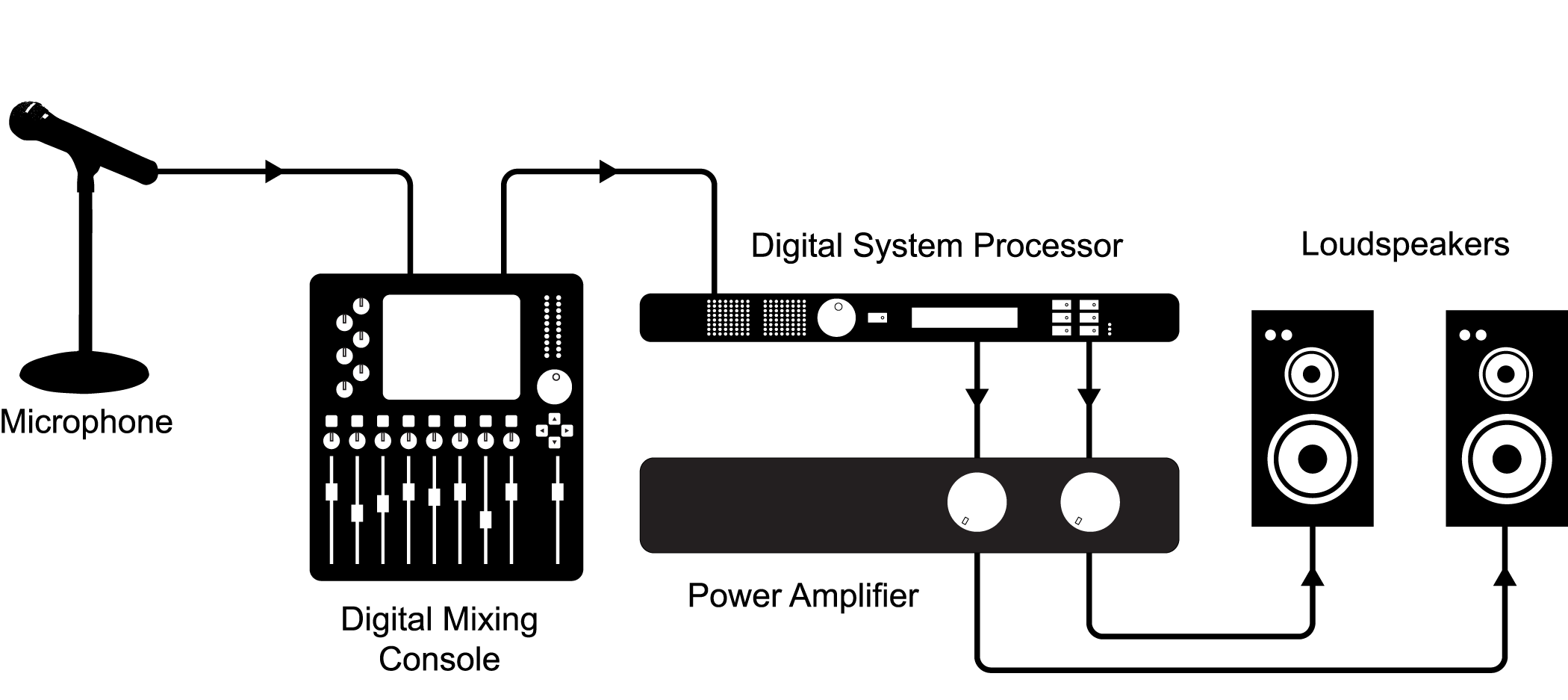
Good interpretation is impossible with poor audio. Ensure the booth receives a clean feed from stage microphones, video playback, and remote guests. A suitable booth, interpreter console, and reliable transmitters or platform channels form the interpreting console backbone that keeps messages clear.
For on-site events, sound-isolated booths protect concentration and reduce noise bleed into the audience. For hybrid or remote events, platform selection, stable network, redundancies, and failover plans are essential. Audience headsets should be tested for volume and channel selection well before doors open.
Work closely with AV crews. Provide equipment load-in times, test signals during rehearsals, and confirm a plan for backups. Small adjustments, like lectern mic placement or reducing stage echo, can greatly improve intelligibility in the booth.
Team Structure, Languages, and Formats
Most language pairs require two interpreters per booth to maintain quality. For complex agendas or longer days, a third interpreter may be advisable. Clarify relay interpreting needs if not all language pairs have direct interpreters, as this affects latency and team composition.
Define your source language and all target languages clearly. If you plan parallel tracks, each room needs its booth and team. For hybrid setups, ensure interpreters can see slides and speakers, not just hear them. Visual access reduces errors and improves delivery.
Finally, align the format and schedule with team stamina. Long sessions benefit from planned breaks, staggered slots, or intelligent agenda design that balances cognitive demand across the day.
Preparing Speakers, Slides, and Agendas
Preparation is a human performance multiplier. Share scripts, slide decks, name lists, and terminology as early as possible. A concise speaker briefing helps presenters understand how interpreting works, why clear diction matters, and how to handle demos, numbers, or quick sequences.
Encourage speakers to avoid talking over videos, read numbers slowly, and define acronyms on first use. If a session features rapid banter, plan a moderator role to orchestrate turn-taking. Small adjustments upstream protect comprehension downstream.
Make sure to promptly communicate any last-minute updates from stakeholders to the project manager. Even brief notes help interpreters anticipate domain shifts and keep consistency across sessions.
How to Choose a Reliable Provider
A strong partner provides both people and technology. Look for an agency that offers items on a vendor qualification checklist, such as vetted interpreters, tested equipment, and a dedicated project manager. Check the booth’s occupants and ask for references from similar events, not just the brand on a proposal.
Evaluate how the provider handles risk. Do they propose backups, alternative mics, or remote failover options if a presenter is offsite? Clear escalation paths and realistic staffing plans indicate experience and care for outcomes.
Finally, expect transparent scope. A reliable partner defines what is included, how many interpreter teams, equipment details, and timelines for materials. Clear documentation reduces surprises and supports budget control.
Sim-Trans Legal Translation & Interpretation Services provide Simultaneous Interpretation Services in Dubai at affordable prices.
Booking and Project Workflow
A typical engagement starts with discovery. You share dates, venue, agenda, and languages. The provider recommends team size and equipment, assigns interpreters, and sets milestones for materials. The lead time depends on the season and event scale, so early contact improves availability.
Next comes technical planning and rehearsals. AV and language teams map signal flow, test microphones and channels, and align cues. Materials are finalized and glossaries refined. On the day, the project manager coordinates call times, monitors sound quality, and handles adjustments.
Post-event, teams can review recordings for quality insights. Organizers share feedback, and learning informs future events. A structured workflow builds institutional knowledge and repeatable success.
Pricing and Budgeting Without Surprises
Budgets for language support depend on variables like team size, hours, equipment, and complexity. A provider should outline transparent pricing logic and itemize scope so you understand where costs originate. When comparing offers, ensure you are matching the same components and risk coverage.
Consider how many rooms, tracks, and languages you need, as well as setup days and rehearsals. Specialized domains may require additional preparation time. Hybrid or remote components change the technical stack and testing requirements, which can also affect budget planning.
When details are uncertain, request options. A core package with add-ons can help you stay flexible as agendas evolve. Should formal quotes necessitate event specifics, please document the information currently available and indicate the remainder as [VERIFY: detail] for future refinement.
Industry Use Cases Across the UAE
Different sectors have different communication patterns and terminology. Aligning interpreters to industry context lowers risk and raises clarity. The unifying principle is use-case alignment between your content and the team selected for the booth.
Conferences and Events benefit from simultaneous conference interpreters who can keep pace with keynotes, panels, and Q and A. Corporate Meetings often require confidentiality and exactness in strategy reviews, investor days, or internal town halls. Government and Diplomatic Services prioritize protocol, nuance, and careful phrasing. Legal and court proceedings demand fidelity to the record and precise handling of the cited language.
Medical and Healthcare events require accuracy for patient safety and compliance with clinical terminology. The Oil and Gas Industry involves technical processes and HSE discussions. Finance and Banking meetings are dense with numbers and regulatory terms. Tourism and Hospitality prefer clarity and warmth for brand messages. Education and Academic Institutions value research accuracy, while Trade Shows and Exhibitions emphasize demos and rapid briefings. Media and Broadcasting require low-latency delivery and tone management. Technology and IT Conferences move fast with product jargon and live demos. International Organizations and NGOs run multi-stakeholder forums with varied language needs. Aviation and Maritime, Real Estate and Construction, Luxury Brand Events, Sports Events, Religious Conferences, Training and Workshops, and the Pharmaceutical Industry each present unique terminology and delivery styles that shape interpreter selection.
Location-Specific Hiring Tips Across Dubai Districts
Venues differ in access, acoustic profiles, and load-in rules. When planning in distinct districts, venue policies influence booth placement, power, and technical setup. Early site checks help your team design venue logistics that fit the room and audience layout.
Sheikh Zayed Road corridors often host large hotels and conference floors that support full booth builds. The Trade Center and nearby venues may have existing infrastructure and strict schedules for rehearsals. Business Bay boardrooms might need compact tabletop booths and careful cable runs.
Expo City Dubai, Jumeirah Lakes Towers, and Dubai Investment Park can host multi-room programs, so map interpreter teams to tracks and wayfinding. For Bur Dubai, Al Karama, Al Barsha, Al Quoz, and Dubai Production City, confirm truck access, rigging times, and any neighborhood-specific logistics to prevent late surprises.
Onsite vs Remote Interpreting
Onsite and remote models each have strengths. Onsite delivery supports richer stage awareness, direct team coordination, and fewer network variables. Remote models add flexibility and reach but require a robust platform, remote simultaneous interpreting experience, and clear contingency plans for connectivity.
For hybrid events, define camera angles, audio routing, and slide visibility for interpreters early. Provide a green room or virtual equivalent so the team can run checks and address last-minute changes without interrupting production.
When making decisions, consider the audience size, geographic spread, and technical maturity of all stakeholders. A brief risk analysis will highlight which model fits your goals and constraints.
Measuring Quality and ROI
Quality starts with preparation and ends with audience comprehension. Build quality assurance into every phase: glossary alignment, rehearsals, channel tests, and day-of monitoring. After the event, capture insights from interpreters, AV, and attendees to refine playbooks for next time.
Simple feedback forms tied to session types reveal where to adjust pacing, slides, or microphone technique. If recordings are available, spot-check sessions with technical terms to validate consistency. Incremental improvements compound across your event calendar.
ROI is not only cost control. It includes schedule efficiency, message clarity, and stakeholder trust. When multilingual audiences feel included and informed, overall event value rises.
Comparison Table: Modes of Interpretation
Choosing the right mode depends on content, time, and audience. The following table summarizes the core distinctions that support mode selection during planning.
| Mode | Best for | Speed | Equipment | Interpreter team | Pros | Considerations |
|---|---|---|---|---|---|---|
| Simultaneous | Conferences, panels, broadcasts | Real time | Booth, console, headsets or platform | Pairs per language | No pauses, keeps momentum | Requires technical setup and planning |
| Consecutive | Press briefings, small meetings | Slower | Microphones only | Often solo | Minimal equipment | Speaker pauses extend duration |
| Whispered | One or two listeners | Near real time | Portable set optional | Solo or pair | Lightweight solution | Not ideal for large rooms |
| Remote | Hybrid or virtual events | Real time | RSI platform, stable network | Pairs per language | Flexible, scalable | Connectivity and platform learning curve |
Decision-Making Framework
Use this pragmatic path to build clarity and reduce risk. Treat it as a decision matrix you can revisit as details change.
- Define objectives and audience. Could you please clarify who requires which languages and the reasons for the current
- Choose the mode. Select a simultaneous mode for optimal flow or a consecutive mode for smaller or pause-friendly sessions.
- Map delivery model. The delivery model can be either on-site, remote, or hybrid, depending on the venue and stakeholders involved.
- Confirm rooms and tracks. Each room should have a booth team for each language.
- Plan equipment. Plan for booths, consoles, headsets, or platform channels.
- Shortlist providers. Check experience in your industry and venue type.
- Validate availability. Reserve interpreters and equipment early, especially in peak seasons.
- Scope materials. Prepare materials such as slides, scripts, terminology, and pronunciations of names.
- Rehearse and test. This includes the audio chain, channel mapping, and redundancy checks.
- Run the show. Monitor sound quality and team rotations during delivery.
- Debrief. Gather feedback, document lessons, and update your playbook.
Frequently Asked Questions

- What is the difference between simultaneous and consecutive interpreting? Simultaneous happens in real time without pauses, while consecutive requires the speaker to stop so the interpreter can render the message.
- How many interpreters do I need per language? Most events require two interpreters per language to maintain quality and manage cognitive load across sessions.
- Do I need a booth for small meetings? For small rooms, portable solutions may work, but proper booths improve audio quality and interpreter focus, especially for longer agendas.
- Can we do hybrid or fully remote interpretation? Yes, with the right platform, stable connectivity, and rehearsals to validate audio, video, and slide feeds for interpreters and audiences.
- What materials should I share before the event? Final slides, scripts, terminology, speaker names, and session order help interpreters prepare and keep terminology consistent.
- How far in advance should I book? Earlier is better to secure the right team and equipment. Lead times vary by season and event size.
- Can the same team cover multiple rooms? Not simultaneously. Each room with live content needs its team to ensure uninterrupted service.
Conclusion
Finding and managing the right simultaneous interpretation partner is about clarity, preparation, and proven delivery. Whether your priority is audience inclusivity, time efficiency, or high-stakes accuracy, the right plan and people protect outcomes. If you are searching for a simultaneous translator in Dubai or evaluating options near you, align scope, equipment, and skills to your goals.
For end-to-end support across venues and formats, consider Simultaneous Interpretation Services in Dubai from Sim-Trans. From discovery to day-of coordination and post-event debriefs, the team brings market experience and a practical mindset to your program. Contact Sim-Trans Legal Translation & Interpretation Services for expert assistance.
Strong planning, tested audio, and professional simultaneous interpreters Dubai unlocks the full value of your content for every attendee. With the right provider, you can scale from boardrooms to plenaries while preserving clarity and pace. Your audience invests their time and trust, and a well-run language workflow returns that investment in full.