
Choosing between simultaneous vs consecutive interpreting is one of the most important decisions you’ll make when booking interpretation services. The right decision accelerates understanding, keeps meetings on schedule, and protects your brand in multilingual settings. The wrong one can slow your agenda, inflate costs, or confuse your audience.
In this buyer’s guide, we break down how each mode works, where it fits best, what to budget in the UAE, and how to plan logistics so you can buy with confidence. For a full framework on scoping, budgeting, quality standards, and vendor selection across all interpreting scenarios, see our pillar guide: Complete overview: “Interpretation Services: The Complete Guide to Choosing, Buying, and Succeeding.”
What is simultaneous interpreting?
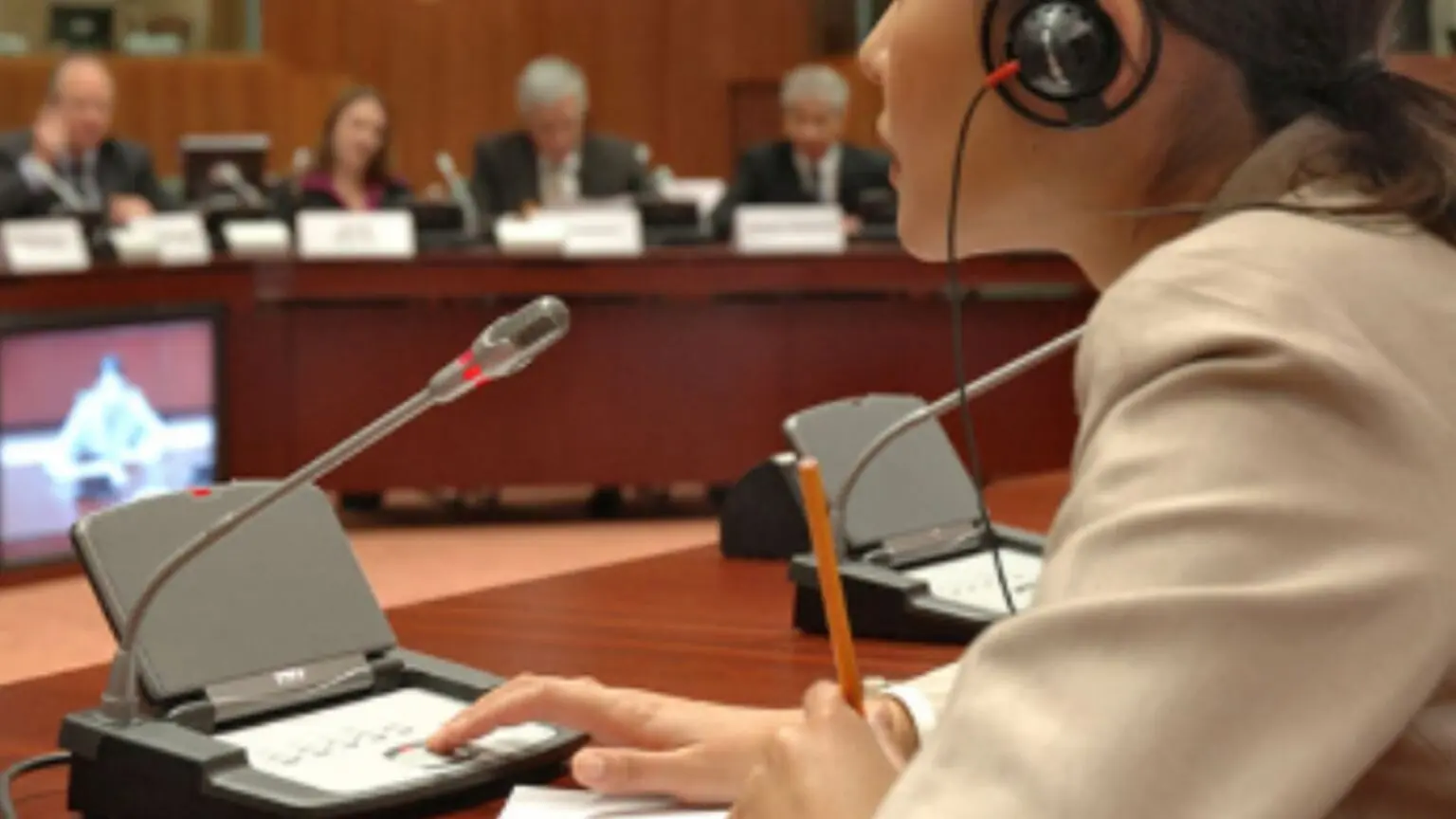
Simultaneous interpreting happens in real time. Interpreters listen to the speaker and deliver the target language almost instantly, with a delay of just 1 to 3 seconds. Because it’s live and fast, this mode supports uninterrupted speeches and large audiences. It’s the standard for conferences, keynote addresses, high-level diplomatic meetings, and broadcast/streamed events in Dubai and Abu Dhabi, as well as hybrid events across the UAE.
1) How it works
- Interpreters work in pairs inside soundproof booths, alternating every 20 to 30 minutes to maintain accuracy and vocal stamina.
- Audio is routed from microphones to interpreter headsets; interpreted audio is sent to audience headsets via infrared or radio-frequency systems, or through a remote platform for online/hybrid events.
- For multiple languages, each language channel has its own interpreter team.
2) When to choose it
- Time-sensitive agendas where you cannot afford pauses (e.g., plenary sessions at the Dubai World Trade Centre or ADNEC).
- The event should cater to large audiences who speak multiple languages.
- Media, livestreams, or recordings that require smooth, continuous delivery.
3) Pros
- Minimal disruption to speakers and program flow.
- It scales well for large venues and multilingual audiences.
- Professional polish for high-stakes events.
4) Cons
- The higher cost can be attributed to the need for team staffing and equipment.
- More planning lead time is required for booths, audio, and rehearsals.
- The event requires experienced conference interpreters who have specialized training.
What is consecutive interpreting?
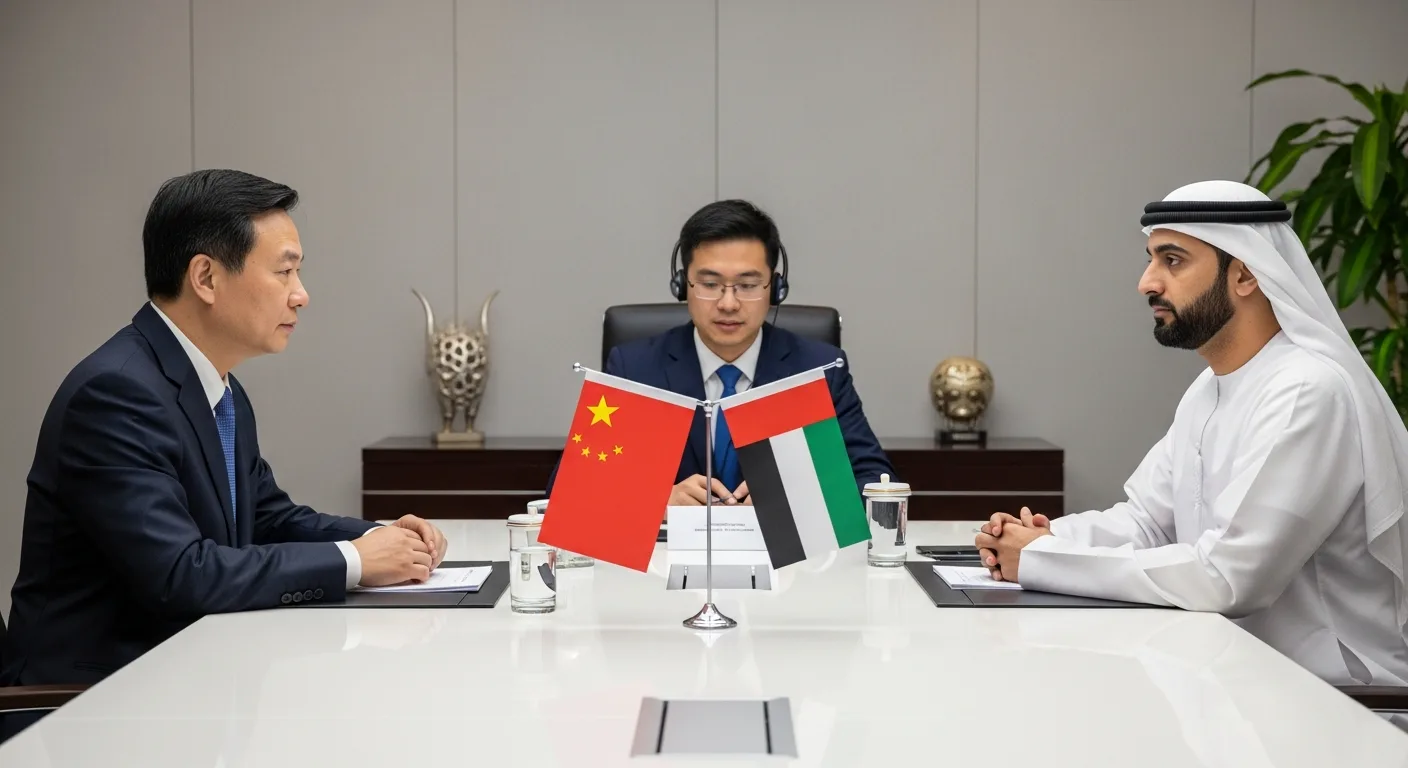
Consecutive interpreting happens in segments. The speaker talks for a short interval, then pauses to allow the interpreter to relay the message in the target language. Interpreters often use note-taking systems to capture key points and deliver coherent summaries. This mode is ideal for interviews, small workshops, technical demos, site visits, and many legal or medical settings across the UAE.
1) How it works
- One interpreter can usually handle a small meeting or briefing (depending on length and complexity), speaking after each segment.
- Little to no equipment is needed; Only excellent acoustics and a microphone are needed for larger rooms.
- Works well in environments where dialogue and questions are frequent.
2) When to choose it
- Choose it for smaller groups where interaction is crucial, such as boardroom meetings in DIFC or Abu Dhabi Global Market.
- These scenarios include technical consultations, legal appointments, and interviews.
- These scenarios are sensitive to budget and offer flexible timelines.
2) Pros
- Lower equipment needs and simpler logistics.
- This system excels in facilitating two-way dialogue and answering questions and concerns.
- Can be more cost-effective for short sessions.
3) Cons
- Extends total meeting time due to pauses.
- This method is less suitable for large audiences or live broadcasts.
- Demands disciplined turn-taking to stay on schedule.
Simultaneous vs Consecutive Interpreting: Quick comparison

Use this side-by-side view to decide which interpretation services mode aligns with your goals, audience, and budget.
| Factor | Simultaneous Interpreting | Consecutive Interpreting |
|---|---|---|
| Delivery speed | Real time (1–3 sec lag) | Segmented (speaker pauses) |
| Best for | Conferences, keynotes, hybrid events, broadcasts | Meetings, interviews, legal/medical appointments |
| Audience size | Medium to very large | Small to medium |
| Interpreters | 2+ per language (per booth) | Usually 1 per language (long events may need 2) |
| Equipment | Booths, consoles, headsets, AV integration | Minimal; handheld or lapel mics if needed |
| Program flow | Continuous, uninterrupted | Slower, with pauses |
| Costs | Higher (staff + equipment) | Lower to moderate |
| Languages | Scales to many channels | Practical for 1–2 languages |
| Remote options | Robust via RSI platforms | Good via videoconferencing |
How to Choose the Right Mode for Your Event or Meeting
If you’re buying interpretation services in Dubai, Abu Dhabi, or anywhere in the UAE, use this quick framework to select the right mode.
1) Clarify your objectives and audience.
- Objective: Are you informing a large audience, persuading stakeholders, or facilitating dialogue?
- Audience: How many people? How many languages? Are there any VIPs or members of the media present?
2) Assess time sensitivity.
- Tight agendas favor simultaneity so speakers stay on schedule.
- Flexible sessions that prioritize discussion may be better suited for consecutive interpreting.
3) Consider Content Complexity
- Technical, legal, or medical content often benefits from specialized interpreters in either mode.
- For dense presentations, simultaneous keeps momentum; for detailed Q&A or testimony, consecutive allows precise, verified transfer.
4) Map your Venue and AV
- Conference centers (e.g., DWTC, ADNEC) are already set up for booths and multi-channel audio.
- Boardrooms and site visits often work best with consecutive and minimal gear.
5) Decide on In-Person, Hybrid, or Fully Remote
- Simultaneous integrates well with remote simultaneous interpreting (RSI) platforms for hybrid events.
- Consecutive pairs well with secure videoconferencing for interviews, depositions, and consultations.
6) Confirm Compliance and Confidentiality
- For legal or regulated contexts, ensure interpreters follow professional standards and NDAs.
- Verify that your provider complies with relevant ISO standards for interpreting services.
Still unsure? Sim-trans Legal Translation & Interpretation Services can audit your agenda and recommend a mode, staffing plan, and equipment package optimized for your goals.
Budgeting and Pricing in the UAE: What to Expect

Pricing for interpretation services varies by mode, language pair, subject matter, duration, and whether you need on-site equipment or a remote platform.
1) Cost drivers
- Mode: Simultaneous usually requires a team of two interpreters per language and specialized equipment.
- Duration: Half-day vs. full-day rates; overtime and evening/weekend surcharges.
- Complexity: Technical, legal, or medical topics may command specialist rates.
- Languages: High-demand vs. less common languages affect availability and cost.
- Location and logistics: Venue access in Dubai or Abu Dhabi, travel to other emirates, and load-in/out windows.
2) Budget ranges and line items
- Simultaneous: Interpreter teams (two per language), booth and console rental, headsets/receivers, technician(s), rehearsal time.
- For consecutive interpreting, consider the interpreter fees, any minimal audio gear required, and potential travel expenses.
- For remote or hybrid events, consider the costs associated with RSI platform fees, hiring a virtual technician or moderator, and ensuring redundancy for connectivity.
Tip: Ask for an itemized proposal. A transparent quote helps you compare providers and avoid hidden costs like last-minute equipment add-ons or unplanned overtime.
Logistics and Equipment Essentials
1) On-site Simultaneous Setup
- Booths: Soundproof booths positioned with a clear line of sight to the stage or a program feed; compliant with professional standards.
- Consoles and headsets: Professional interpreter consoles with volume and channel controls and high-fidelity headsets.
- Distribution: Infrared or RF receivers for the audience; sufficient units for anticipated attendance plus a buffer.
- Technicians: Onsite AV and interpreting technicians to monitor and troubleshoot.
2) Remote Simultaneous Interpreting (RSI)
- Platform: A secure, low-latency platform with multi-channel audio and interpreter handover features.
- Redundancy: Backup internet, power, and audio paths to protect critical sessions.
- User experience: Simple channel selection for attendees; clear instructions in pre-event comms.
3) Consecutive Logistics
- Room layout: Ensure excellent acoustics and visibility; a handheld or lapel mic may suffice for larger rooms.
- Turn-taking: Agree on segment length and signaling for pauses to keep things efficient.
- Notes and materials: Provide agendas, slide decks, and terminology in advance to streamline delivery.
Quality and Risk Management
1) Standards and Ethics
- Follow recognized standards for interpreting services and conference interpretations where applicable.
- Maintain strict confidentiality and signed NDAs, especially for legal, financial, and healthcare settings.
2) Interpreter Selection
- Experience: Ask for demonstrable conference experience (for simultaneous) or relevant legal/technical field expertise (for consecutive).
- Language proficiency: Confirm native-level command in the target language and proven fluency in the source.
- Subject matter fit: Provide reference materials so interpreters can prepare glossaries and names.
4) Preparation and Rehearsal
- Briefing: Share agendas, speaker bios, slide decks, and videos in advance.
- Terminology: Exchange key terms, acronyms, and brand names early.
- Sound checks: Test microphones, channels, and handover procedures before attendees arrive.
5) Monitoring and Feedback
- Live supervision: Have a technician monitor audio quality and channel integrity.
- Feedback loop: Collect stakeholder feedback post-event to refine future interpretation services.
Useful Sources:
[1] ISO 18841 (Interpreting services). (n.d.). International Organization for Standardization. Retrieved December 5, 2025, from https://www.iso.org/obp/ui/en/#iso:std:iso:18841:ed-1:v1:en
[2] De Wit, M., Crasborn, O., & Napier, J. (2023). Quality assurance in international sign conference interpreting at international organizations. The International Journal of Translation and Interpreting Research, 15(1), 74–97. https://doi.org/10.12807/ti.115201.2023.a04
Scenarios: Which Mode Fits Best?
1) International Conference in Dubai
Audience: 600 delegates, from Arabic to English to French. Tight agenda, keynote livestreamed.
- Recommendation: Simultaneous with two interpreter teams per language, full booth setup, and RSI backup for hybrid attendees.
- Why: Continuous delivery, professional polish, and scalability for multi-language channels.
2) Board Meeting in Abu Dhabi
Audience: 12 executives, Arabic to English. Strategic discussion with extensive Q&A.
- Recommendation: Consecutive to support nuanced dialogue and deliberate decision-making.
- Why: Natural turn-taking and limited equipment requirements suit a small, confidential setting.
3) Technical Site Visit Across the UAE
Audience: Engineering team and vendor, English to Arabic. Walkthrough with demonstrations.
- Recommendation: Consecutive with a subject-savvy interpreter; portable audio as needed.
- Why: Frequent back-and-forth and location changes favor flexibility over booths.
4) Hybrid Product Launch
Audience: 200 onsite, 800 remote viewers, Arabic to English to Hindi.
- Recommendation: Simultaneous with RSI integration, clear audience instructions for channel selection.
- Why: Seamless, broadcast-quality experience across on-site and remote attendees.
Buying Checklist: How to Brief your Provider
- Event overview: Dates, venue (Dubai/Abu Dhabi/other emirates), onsite vs remote, estimated audience.
- Languages and mode: Source/target languages and whether you need simultaneous or consecutive.
- Agenda and scripts: Session lengths, speaker bios, slides, videos, and live Q&A plans.
- Subject matter: Technical, legal, financial, and medical share glossaries, keywords, and acronyms.
- Equipment needs: Booths and receivers (for conferences) or minimal mics (for meetings).
- Recording/livestream: Indicate if content will be recorded and how interpretation should be captured.
- Security and compliance: NDAs, confidentiality, and any standards your organization observes.
- Budget constraints: Share a range to help your provider tailor options (e.g., onsite vs. RSI).
Sim-trans Legal Translation & Interpretation Services can translate this brief into an actionable plan with a right-sized team, equipment, and schedule to match your goals.
Why choose Sim-trans in Dubai, Abu Dhabi, and Across the UAE
Sim-trans is a UAE-based provider trusted for certified, legal, and general translation plus end-to-end interpretation services. Our team can provide either a two-person consecutive setup for a high-stakes meeting or multi-channel simultaneous support for a regional conference.
- Conference-grade capability: We provide interpreter teams, booths, receivers, and AV technicians for halls and hotels throughout the UAE.
- Business-critical accuracy: Legal and technical subject-matter expertise for negotiations, hearings, and compliance-driven sessions.
- Flexible delivery: Onsite, remote, and hybrid workflows, with platforms that scale to large audiences.
- End-to-end support: scoping, budgeting, scheduling, glossary prep, rehearsal, live support, and post-event review.
Soft CTA: Share your agenda and languages, and Sim-trans Legal Translation & Interpretation Services will recommend the most efficient mode, staffing, and equipment package so your interpretation services meet both your quality and budget targets.
Frequently Asked Questions (FAQs)

Q: Can one interpreter handle a full day of simultaneous interpreting?
No. Simultaneous interpreting is cognitively demanding. Best practice is at least two interpreters per language who alternate every 20 to 30 minutes to maintain accuracy and quality.
Q: Is consecutive interpreting always cheaper?
Consecutive interpreting is often more cost-effective, but not always. While consecutive sessions need less equipment, longer sessions and complex subject matters can narrow the gap. The best value comes from choosing the right mode for your format, not just the lowest initial quote.
Q: How early should I book interpreters in the UAE?
For conferences and multilingual events, book 4 to 8 weeks in advance to secure the best teams and equipment slots for longer for rare language pairs or peak seasons. For smaller meetings, 1 to 2 weeks is often sufficient.
Q: What if my event is hybrid?
Simultaneous interpreting integrates well with RSI platforms. Ensure clear channel instructions for remote attendees, robust connectivity, and a technical rehearsal to validate audio routing.
Q: Do I need transcripts or translations of slides?
They’re not mandatory, but sharing slides and scripts in advance significantly improves interpreter preparation and consistency, especially for technical or brand-specific terminology.
Conclusion: Make the Right Choice for Your Interpretation Services
Deciding between simultaneous vs consecutive interpreting hinges on your goals, audience size, time constraints, and technical setup. For fast-paced conferences and hybrid broadcasts, simultaneous translation preserves momentum and polish. For small, discussion-heavy sessions, consecutive maximizes clarity and control. If you want a deeper, end-to-end buying framework from scoping to success metrics, see our main resource: Complete overview: “Interpretation Services: The Complete Guide to Choosing, Buying, and Succeeding.”
Ready to scope your event in Dubai, Abu Dhabi, or elsewhere in the UAE? Share your agenda with Sim-trans Legal Translation & Interpretation Services. We’ll recommend the best mode, assemble the right team, and deliver reliable, professional interpretation services that keep your message clear in every language.